Sunday, December 26, 2010

No one was visiting her blog


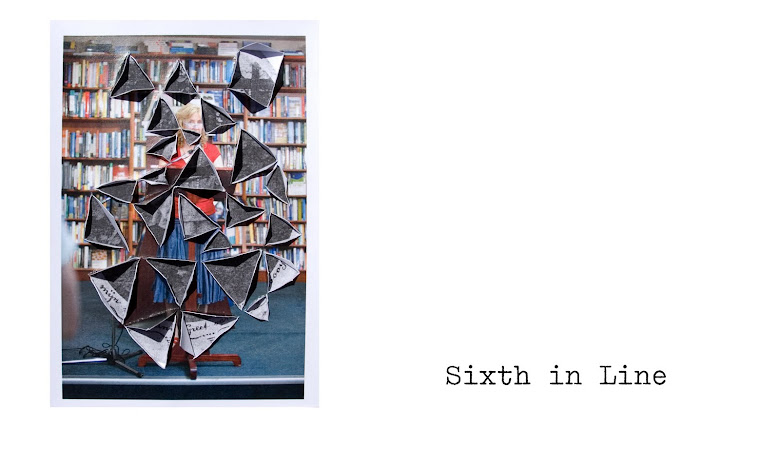
The title here is the caption on a birthday card my daughter sent to me in November. She found it in a New York bookshop and had to buy it for me, she wrote. 'Though it doesn't look like you', she has the dark look I imagine you have when people don't visit your blog- ha ha!'

Seasons greetings to everyone.

Sunday, December 19, 2010

The luck of the draw

My husband let out a heart wrenching cry this morning. I heard it down the corridor. A long loud lament.
‘What’s the matter’ I asked when I found him in his office in front of the computer.
‘The news,’ he said. ‘The news on the asylum seekers, the ones on Christmas Island. It’s unbearable.’

My husband reads the newspapers from top to toe, and then checks up on the ABC news online. I can scarcely bear to read beyond what I hear on the radio when I drive my car. One hundred asylum seekers from Iran in a rough boat crashed up against the rocky cliffs off Christmas Island.

I must not get into a rant on the politicisation of the plight of these people here, still I cannot understand why we are so reluctant to be more welcoming to these desperate people and why the paranoia of terrorism should so dominate the public psyche that people are left to perish on rocks – young men, old men, women, babies, children – because they have to sneak in to this country undetected or else they will be sent back to unknown horrors.

I sometimes wonder how any of us go on living in face of such tragedies, how any of us can continue on our way when disasters like this happen on our shores, not just on our shores but in our neighbourhood. Yet we do.

‘You are too emotional,’ my brother said at our family reunion in Griffith, too easily distressed. I could not believe his words. Can’t he see: I’m not so distressed as he? My distress is on the surface, his is buried deep in his heart and body, caught there in the stent the surgeons put in to open up his artery; caught there in his blood pressure which rises almost visibly whenever he walks through the front door of his office at his work as accountant and panics.

Two members of my family work as accountants. My father was an accountant. My youngest sister and this brother both work as accountants, she with a major bank and he for an air-conditioning form.

When I was young accountancy was a profession of which my family were proud. When the nuns took the first roll call and filled out identifying details at the beginning of each year, she asked each of the class the question ‘What does your father do?’. I was proud to answer, ‘My father is an accountant’.

My father wore suits to work each day, dark suits, white shirts and black shoes. He traveled to the city. But he had wanted to become a chemist my brothers told me, years later. My father had wanted to experiment in chemistry. He wanted to invent things, develop new products. He could not do this in Australia and make a good enough income on which to raise his large family. Accountancy he could study at night. Accountancy was something he could move into little by little and make good money along the way.

So why were we so poor I wondered often when we were little. Why were we so poor, and others who lived in the houses around us in Camberwell and Deepdene, so rich.

Now I think the other way around, despite my anxieties about making ends meet, the fact that I am here and they, those asylum seekers are there, does not shift too easily. The luck of the draw you might say.

My analyst used to talk about the need to make the most of what you have. There are those who are offered a great deal throughout their lives who cannot do much with it and others who receive very little who achieve great things. It is not simply a matter of what you get, it is more about what you do with it.

I went to see a physiotherapist yesterday on the advice of my daughter’s boyfriend’s mother who advised me that my leg will only get back to normal if I work at it. She knows from experience. She broke her ankle some time ago.
‘It took me a year and they did dreadful things to me, but now I can even run again,’ she said.

I cannot run, the best I can get up to is a limping stride, and then it is more like an old lady hobble.

The physio, a young woman with dark hair and a gentle manner plunged me back into memories of my past when I was a social worker in a community care centre and worked alongside the physiotherapists and the occupational therapists and other so-called allied health professionals and doctors to deliver services to the local community.

I was one of them then, but not so now. There is a strange disjuncture between how I feel inside and how I am on the outside. It hits me once more. When I first began work as a social worker, my mother – then around my age now – said to me often,
‘I would not want to see someone your age. You lack experience’. I took offense. How could I ever catch up with her?

When I told the physio I did not understand why it takes so long for my leg to heal given that the surgeon said the bone is now completely healed, but it will take between eight months and a year to come back to normal, she went into a long and detailed physiology lesson about what happens when a bone breaks.

It is not just the bone that needs to heal, all the body’s nearby cousins – the tendons and muscles – need to recover. The blood supply to the area increases to help the process and in so doing contributes to the heat and pressure which cause the swelling that pops up around my ankle at the end of my more strenuous walking days. I must rest then.

We talked in detail about my idiosyncratic experience and the physio felt around my knee joint to get some idea of how matters fare. She dug her tiny fingers into the muscle that runs down the top of my thigh just above the knee joint. She wanted to loosen it, she said.

This muscle is too tight from non-use, and as a consequence, it is not working as hard as it should.

All day long my leg has ached. This is how it should be my daughters say when I complain that the physio has made things worse. This is how it should be when you use muscles that you have not used for some time. They ache.

If I keep using a rolling pin down the length of my thigh to loosen the muscle and if I keep up the exercises the physio has set, in time I will get stronger. In the meantime, my leg aches worse than it did before.

Healing can be a painful process, perhaps that is why I had avoided it. But I cannot avoid the news about the asylum seekers.

Saturday, December 11, 2010

Writers are Vampires

Last night I read Jim Murdoch’s wonderful blog post about our 'better halves'. In it he lists a number of writers and the women who are, to use that old expression, ‘the wind beneath their wings’.

Life as the spouse of a writer is a tricky one, especially when both are writers. Jim capped his post off by telling us about his wife of fourteen years, also a writer, Carrie Berry.

Jim and I have communicated long and hard about the nature of the blogosphere and the autobiographical. Jim describes himself as a private man and suddenly there it is: he is telling us something more personal – which he does from time to time – and again, I am enthralled by the vagaries of this space, the blogosphere, in which we reveal so much about ourselves, even as we conceal so much as well.

I met a writer, Lucy Sussex, at LaTrobe last week and we talked about the business of fictionalising people from our lives in order to protect them and us from the sorts of upsets that occur when someone is seen to be portrayed unfairly,when we are forced through the written word to look at ourselves through someone else’s eyes, and we do not like what we see there.

Lucy Sussex describes writers as ‘vampires’. We suck the lifeblood out of people. We feed off others. I shudder to think this may be true.

In an essay ‘On hurting People’s Feelings’ Carolyn Wells Kraus writes about the nature of biography as an act of autobiography. She argues that ‘reducing a person’s story on a page, robs it of complexity’. Non-fiction, she argues ‘sucks the life of a person onto the page’ and distorts that life to the author’s own ends. Characters are slanted in the direction of the author’s obsessions.

‘The real problem,’ Kraus writes ‘is that you’re borrowing the peoples’ identities to tell your own story.’ Kraus quotes at length from her own writing and others to demonstrate the ways in which a writer’s bias influences the description of other characters. And so in telling the stories of others we inevitably tell our own stories.

‘There is no script,’ Kraus argues, ‘only improvisation. We fill in the outlines from the details. All we know of the world as writers is what we see – images, words, scenes. We supply the meaning, and we alter that meaning with every sleight of hand.’

I say of myself as an autobiographer – and I’ve heard this said of other writers, like Helen Garner – to some extent we get away with it because we write about ourselves with ‘unflinching honesty’. Certainly Garner writes the most embarrassing things about herself that some might consider highly self-critical. But I know all too well that we are selective about our self-criticisms when we write.

I will not write in my blog about the things that ‘really’ trouble me, the things of which I feel most ashamed. I might write about things that once caused me to feel shame but over time and often times through the writing itself I have overcome that shame. I will not pass on other shameful secrets that resonate for me here now.

I think of WikiLeaks and the great kafuffle in the world about all this ‘indecent exposure’. We are a puritanical lot, by and large, and full of contradictions. The things we will tolerate as opposed to the things that unsettle us.

I gather here in Australia, Julian Assange is considered something of a hero, a man in search of freedom of speech, a whistle blower extraordinaire; whereas in the US he is considered a dangerous force. Noam Chomsky who spoke on the radio here during the week does not see Assange negatively, but Chomsky reckons a good proportion of Americans do. And yet America is home to freedom of speech.

I doubt that there is such a thing as free speech. We might have the right to speak as we please in certain ‘democratic’ countries, but there are always consequences to whatever we say, and on top of that there are also the necessary restrictions on freedom of speech when the speaking out hurts others, such as in situations of racial vilification and the like. And then, how is there freedom for the writer who uses another person’s experience to colour their story, sometimes unwittingly?

I am working on a chapter in my thesis on shame. Shame links to the desire for revenge, through what Helen Block Lewis has described as ‘humiliation fury’, the fury we feel after we have had our noses rubbed into our vulnerability and are left reeling from the abuse, assaulted, belittled, and shamed.

The anonymity of the Internet might allow us to hide our shame and to hide from our shame, but oftentimes it reinforces the shame for me. The number of times I sit at the keyboard reading back over something I have posted and cringe at what I have put there is equaled only by the shame I feel on behalf of others whom I consider have written too explicitly, and yet I persist in taking off my psychological clothes, revealing these inner thoughts on line, even as I know that there are experiences that look one way to me, but will be read in a different way by others.

Others will critique my perspective in ways I had not anticipated. Again, I cringe at my own willingness to expose myself in this way and yet without the autobiographical how can we learn about ourselves through other people’s internal worlds, however constructed they may be.

Saturday, December 04, 2010

It's tough being human

The Zen master, Katagiri Roshi speaks throughout Natalie Goldberg’s book, Writing Down the Bones. His presence makes me doubt the writer. She quotes him in and out.

Just as I read Roshi's name for about the fifth time half way through the book, I stop to do a Google search. Who is this man? Is he for real?

He is real of course, albeit dead. He died in 1990 at the less than ripe old age of sixth two and Natalie Goldberg could not believe it when he died.

Reading through some of her thoughts at his death, I find myself thinking about my own obsession with psychoanalysis. Goldberg is into Buddhism and shows total love and devotion to her Buddhist master. For him, she will do anything.

She will sit for hours chanting, bare feet on cold floorboards. For days, she will get up early, at 4.30am then work at prayer and reflection all day, with only a short lunch break until 10.30pm, all in the name of Buddhism - the serenity, the inner peace and calm that Buddhism offers.

I read the story and shudder, and then think twice about my own preparedness to do extraordinary things in the name of my obsession, psychoanalysis. To travel daily for years for my fifty minute session twenty plus kilometers from home and back at great expense.

I did this because I believed it was good for me. I believe it has been good for me, but at the same time, I wonder whether it might have been better for me had I not become so enthralled with the process, had I not fallen so helplessly in love with my analyst for all those years.

The Google site describes how Natalie Goldberg later felt betrayed by her father and her teacher Katagiri Roshi for being human. Roshi, Goldberg later discovered had breached boundaries with another student.

The child in us wants to believe we have perfect parents, or substitutes for them in other forms - religion, Buddhism, psychoanalysis - only to discover later, that our parents are flawed, as are we by association.

Idealisation shifts to denigration all too easily if we are not careful.

Ah but the comfort of these '-isms' is alluring when it's so tough being human.

Saturday, November 27, 2010

The Life of Picasso - a short story.

My daughter, Olivia, owned thirty-six toy frogs, all shapes, sizes and shades of green. They lined her bed, her bookshelf and chest of drawers. On the eve of her tenth birthday, still dressed in her frog-covered pyjamas, Olivia pleaded with me,
'I want a real frog now. One I can actually love and hold. These toys are boring.' She held up her finest frog, Sebastian. His front legs, made of emerald velvet and stuffed with sawdust, drooped. She shook him at me.
'I’ve checked out tree frogs on the Internet. I know what to do. It’s easy.'

I couldn’t disappoint her. I was like the old woman in the shoe. Four children, one husband, three surviving rabbits, two blue budgies, one guinea pig, and now a live green tree frog named Picasso. The back yard was littered with empty hutches, abandoned birdcages and cracked fish tanks. Along the fence between the rose bushes, rows of makeshift crosses each inscribed in a child’s handwriting marked our cemetery.

Olivia lifted Picasso from the resurrected fish tank that was now his home and sat him on the flat of her hand.
'He feels slimy!'
'Cover him with your other hand or he’ll jump.' I said. I hovered over the two of them ready for action.
'You don’t need to tell me what to do.' Olivia looked down on Picasso with a mother’s smile.

Picasso took a flying leap from her hand and landed at my feet. Olivia squealed.
'Grab him,' I said, 'before he jumps again.' But Olivia only whimpered. She held onto her hand like it’d been bitten.
'Yuk. He peed on me,' she said. 'It’s disgusting. I’m never touching that frog again, ever.'

I rescued Picasso from the floor. He was all-legs and the suction pads on the tip of his toes stuck to my hands as I tried to peel him from me. I picked off bits of fluff that clung to his body and put him back into the water bowl in his tank. I was careful to place him in the shallow end where he sat like a statue and soon fell asleep.

On this humid summer night, Olivia practised her cello and Picasso blew a bubble under his chin that went in and out like a bellows. Then he gave off a deep ‘wark-wark’ sound. It rumbled in unison to the scraping of the bow over the strings.

I lifted the lid of the cricket container to let four or five crickets slide into the tank.
'That’s revolting,' Olivia said, and zipped her cello into its case. She marched off upstairs.

The crickets edged out from under the cover of an egg carton and plunged into the tank. One managed to leap outside. It landed on the table. I grabbed for it but it sprung into a gigantic arc and landed on the floor. I bent to grab again but my hand came up empty as the lone cricket scuttled under the skirting board and out of reach.

Back in the tank Picasso noticed movement nearby. He sat very still and fixed his black eyes on the other intruders. Then in a sudden rush he slipped out his long pink tongue and dragged in a cricket whole.

Some months later the fine point at the end of Picasso’s spine began to jut out in a way it never had before. There were dark raised spots along his skin. He had lost his bright green sparkle and turned into the colour of the ocean on an overcast day. Picasso did not leap to swallow the crickets any more. He was too slow and getting thinner.

I made Olivia come with me when I took Picasso to the vet, one who specialised in reptiles and amphibians. The walls of his consulting room were covered in animal pictures and in the waiting room there was a large glass cage lined with carpet off-cuts. The fat scaly tail of a goanna poked out from behind a rock. The place stank of Sorbitol.

The vet was a young man with a gold stud in his left ear lobe. He picked up Picasso in his fine-gloved, well-washed hands and squeezed the frog’s stomach. He invited us to do the same. Olivia pulled back but I slid my fingers across the ridge of Picasso’s belly. It felt as moist and squishy as ever. I was too scared to push harder to feel whatever else might lie underneath.

'This frog has a severe case of gravel ingestion,' the vet told us. 'What sort of set up do you have for him at home?'

I felt accused and my explanation sounded limp even though I had followed all the instructions from the pet shop where we bought Picasso.
'Thought so,' the vet said. 'Too much gravel. Whenever this frog swallows a cricket he takes in a piece of gravel with it, and for some reason he hasn’t managed to pass any out.'
'Why did you have put in so much, Mum?' Olivia glared at me. 'I told you it was too much.'

The vet pushed once more onto the sides of Picasso’s belly in a way that made us both squirm.
'He’s got a gut full of stones. At least a third of his weight. A dose of laxatives might fix it. It’s all I can suggest. Caramel flavoured,' he said. 'Frogs love the taste.'

Picasso took it in. He had no choice. The vet had his mouth pried open with a metal stick and shoveled the stuff in; brown and gluey, like melted toffee.
'As long as he doesn’t vomit it back up,' the vet said, 'it might help shift the gravel. It’s his only hope.' He washed his hands for a second time. 'Put him in a separate container tonight, otherwise you won’t know whether he’s passed anything.'

I settled Picasso in the shoebox I’d brought him in.
'That box is no good,' the vet said, 'cardboard burns their skin. An ice-cream tub would be better. Always wet your hands first and leave them wet when handling your frog.' He rinsed his own hands under the tap yet again. 'Otherwise frogs are surprisingly strong.'

'We’ve had this one for ages,' I told him. I did not want him thinking I was a complete incompetent but now I wondered how long was it since I last cleaned out Picasso’s tank? Maybe it was my fault after all. Maybe I’d left him in his own mess for too long.

I remembered my goldfish Priscilla. I got her when I was Olivia’s age. She zipped about in her bowl for months until one day out of nowhere she produced a long line of what looked like eggs. Little jelly eyes that stuck to her rear end instead of dropping off the way fish poo normally does. Then her swim bladder went and she tipped over to one side. I poked at her and she righted herself again but a short time later there she was back on her side. My mother said she was done for.
I put her in some water in a glass jar, which I left overnight in the freezer. That way she could float into a coma, freeze to death and not feel a thing.
I still felt guilty.

'If he can get rid of the stones,' the vet said, 'Picasso’ll be okay. Otherwise we’ll have to put him down. It’s the kindest way.'

Later I checked Picasso. He had managed to escape from the yellow ice-cream tub but not before leaving behind a pile of pebbles. He was half submerged in the water bowl, like a crocodile. I put five meal worms, like thin orange witchety grubs, in the centre of a dish and propped it in front of him.

Meal worms from the pet shop came hidden in small plastic containers filled with sawdust. I kept the container in the fridge where the meal worms went into a sort of hibernation with the cold. When I picked them out one by one they wriggled to life under the warmth of my fingers then waggled their short legs.
Even warmed, the meal worms were sluggish but they moved enough to attract Picasso’s attention. He took in five at once. A gulp, a burp and they were gone.

It was the law of the jungle and it got to me. When I had first noticed Picasso’s weight loss I worried that his diet was off. The pet shop man suggested instead of only offering crickets, as an occasional treat, I should feed him a few pinkie mice. I bought three. They came home in a brown paper bag. I could scarcely look at them let alone leave them at the base of the tank for dinner. Hairless, pink and foetal, their eyes still sheathed in skin, they squirmed noiselessly among the gravel. They were gone the next time I looked.

Olivia pointed her finger at me. 'How could you do it? You’re a murderer.'
'I only did as the vet suggested. You needn’t try to make me feel guilty, I feel bad enough already.'

I always felt guilty when one of the animals got sick or died. Frogs, rabbits, guinea pigs. I should have kept them cleaner or warmer. I should have fed them different food. I should have offered a better life or at least taught Olivia how. At the same time a part of me wished them dead.

The night after our visit to the vet I fell into a restless sleep and dreamed of open mouths that swallowed baby mice whole. I woke in a flap.

Couldn’t keep anything alive. What sort of mother was I? The sheets on my side of the bed were soaked with sweat. I slid out from under them and tiptoed down stairs.

Picasso in his tank leaped Tarzan-like from one branch of the spider plant to the next. I opened the fridge door and doled out another dish of meal worms. They wriggled blindly on the saucer. Picasso eyed the white dish then plunged at it and onto it, swallowing five meal worms in one hit. He bulged slightly in the middle but sat upright on the plate.

I could just imagine those meal worms as they writhed about in Picasso’s belly, in among the gravel. My back ached, my eyes were blurred from lack of sleep but there was Picasso as green and shiny as a bright new day.

At breakfast Olivia walked past the frog tank reading her latest Pony Pals.
'Look at Picasso,' I said. 'How well he’s doing.'
'Oh,' she said. 'That’s good.' She gazed out through the kitchen window. 'Mum. I want my room painted pink. And can I have a horse?'