The telephone rang and interrupted my first fitful efforts at sleeping.
‘You fucking bitch,’ he said. ‘You fucking bitch.’ His voice trailed off. Time slowed down. Is this a dream, I wondered? Is this a phone call in my sleep? In a minute I’ll wake up.
‘Everyone knows what you’ve been up to. Everyone knows but me. I’m the last to know.’
I found my voice, but the words were croaky.
‘What are you talking about?’ I knew what he was talking about but I wanted to deny it even as I knew it was true. I wanted to think it did not matter. I wanted him to think it did not matter that I had betrayed him.
I had slept with someone else. Slept with, such a euphemism. Had sex with, fucked, shagged, you name it in biblical terms. That I had gone off with another man while he was away for weeks on end.
Somehow he expected me to sit at home, the good and loving girlfriend, the good and loving partner, always faithful, irrespective of how he behaved.
‘I’m coming over now,’ he said. ‘I’ve got your stuff. You can have it back. I never want to see you again.’
The dial tone buzzed in my ear. I kept the phone close. I could not believe he had rung off. Soon he would be here. I dragged on my dressing gown. Good, I thought. He’ll be here soon. I’ll settle him down. I’ll soothe him. A few gentle words.
I heard his car pull up in the carport below. I looked through the blinds. He opened the car door and flung the books and clothes that I had left behind at his house as a mark of our relationship.
When we had separated three months earlier, we agreed on an amicable split. We agreed to go our separate ways, that we would each be free now to explore new relationships.
I pulled up the blinds and swung open the window. ‘Come up,’ I said. ‘Don’t just throw stuff. Come up and talk.’ He continued to throw more books, my old grey cardigan, my CD case, my sunglasses onto the pile. I kept my voice low. I did not want to wake the neighbours.
‘Please talk,’ I said again to the silent man whose arm moved up and down like a piston as he threw the last of my shoes onto the pile. He slammed his car door shut. He had not cut the engine. He reversed without looking up to see me.
That was how we left it. The end of the scene. The death of a relationship. Silence is the best revenge.
I have no trouble with the word 'hate' these days. It rolls off my tongue easily. I can tell someone that I hate someone else; even that I hate them as long as I also feel a fondness, a love for the one to whom I might direct the word hate, otherwise I can only talk about such hateful feelings behind someone’s back.
I can try to qualify my comments, when I am angry with my husband for instance, to say to him, I really hate it when you do that, not, I hate you when you do that, but the truth is, in that moment, I hate him.
I know well enough that it is a sign of confidence in her mother’s love when a child is able to say to her mother directly, 'I hate you'. To know that her mother will tolerate such an expression and not retaliate or go under into shock and horror, or be destroyed by it because this mother recognises that her child says these words out of hurt or disappointment in the mother whom the child also loves.
It is not unusual to hear such utterances from three and four year olds, but as we get older it seems we learn to modify such outbursts. We learn, if we have gone to the right behavioural schools, to criticise the behaviour, not the person.
‘It’s not 'you' I hate, it's what you do...when you get drunk, when you refuse to tidy your room, when you don’t pull your weight, when you carry on like that, when you're slack, when you give up on yourself, when you stop caring about others, about me.’ It's okay to hate these things, these behaviours, but to hate the person who does these things becomes a no-no.
It is important to distinguish the person from the behaviour and yet, the satisfaction that comes from really being able to say to someone or of someone, ‘I hate you’ knows no bounds. It gives great satisfaction, and yet almost immediately there is a wish to qualify it. I hate you when...
We throw around the word ‘love’ with such ease, but the word 'hate' we are wary of, for good reasons – all those wars, all that bloodshed.
Hatred is not something to spread, but it can be spread in subtle and secret ways and often even by people who purport to love and to care.
When I was at the Writer’s House, Peter Bishop urged me to write into my rage. Write into your rage he said, vomit onto the page.
Peter Bishop also says to write out of ‘doubts and loves’. Where do we put the hate? I wondered. Is not hate on a continuum with the love? The ones we love are the ones we hate, beginning with our parents.
When I first read William Gaddis’s words quote in the Sunday Age in an article by Don Watson I knew that these words were important for me.
‘The best writing worth reading comes like suicide from outrage or revenge.’
It is not the first time I have been in a creative hole as deep as this. It is not the first time that I have sat alone at my writing desk wishing for something to come to me, some thread, some thought, some feeling or image that I might follow, but it is no less painful. I ache all over with the refusal. My mind will not give it up. My mind will not let the words flow, will not let me arrive at some point where I can think, ah ha I have it. I know now what I am writing about. I know now what this book is about. I can proceed. I start again and again, so many false starts so many attempts to move beyond this desperate feeling of not knowing what I am doing.
And the audience whom I tried to send away only five minutes ago is back again, my parents and siblings in the front row alongside my conscience. They say to me again, in a chorus, what are you on about? We don’t want to know this. Tell us a story instead and make it good. Make it interesting.
But if I start to tell a story, I fear I will be in trouble with someone. That someone will tap me on the shoulder and say ‘What gives you the right?'
Showing posts with label love and hate. Show all posts
Showing posts with label love and hate. Show all posts
Saturday, January 29, 2011


Saturday, October 02, 2010
The Company of Strangers
It is an almost perfect spring day, sunshine, cloudless blue sky and twenty two degrees Celsius ahead. Today I shall venture out into the world.
I realised yesterday that I have not been out of doors for over ten days. It is not as if I have felt isolated. The world comes in with the people who pass through this house, as well as through the Internet, through the telephone and through blogging.
This sedentary life becomes seductive. There is a cosiness to my place on the couch under the bay window, a safety in seclusion.
In my dreams I am mobile. In my dreams both my legs work. My unconscious may not yet have caught up with my physical state. In my dreams I drive cars, I carry babies, I run. But dreams as we know, are symbolic representations of states of mind that go on underneath, and that I can still walk in my dreams does not really mean my unconscious has not registered this event because there are so many other hints in my dreams - car accidents and falling - that I am sure I am working on getting over my leg, not just physically, but also in my psyche.
Eryl, has written a wonderful post on her tendency to write the word ‘love’ in reference to other people’s blog posts when in search of a suitable verb that honours her reading. Troubled by her use of cliché, she wonders about the meaning of this. The all too easy throw away lines: I love your poem, I love your painting, I love this post, this blog, as if to say I want you to know I was here, but I cannot be bothered, or do not have the time to reflect longer and find a more meaningful word to offer. Elizabeth, on the other hand, has written about the trolls who periodically invade her blog and send her messages of hate.
Much of this has to do with the nature of the Internet. Norman Holland has called it the Internet Regression, our tendencies, when locked away on our computers, to engage with the outside world in less well-defended ways than we might otherwise employ.
When I first started to blog I found myself anxious, frightened of what I might say in comments on other people’s blogs, and frightened of giving offence or of wording things in such a way as to be misinterpreted. There are no spaces for eye contact or for opportunities to scan the other person’s facial expression in the blogosphere. There are no opportunities for establishing through body language whether the person speaking is serious or joking, whether we must listen attentively or only lightly.
The only way we can understand the anger or the sadness the joy or the pain is through the words and images and words are clumsy beasts, while images are open to interpretation. Words and images do not always travel well from one person to another.
Lost in translation from the person through the computer and into and through the eyes and ears to the heart and mind of another. Norman Holland writes about Internet regression as a fact of life. There are three ‘symptoms’ to which he refers, the first is ‘flaming’, namely the typewritten rage that people can sometimes fly into ‘at some perceived slight or blunder’ akin to road rage. The second refers to a sort of sexual harassment, unwanted advances on line. Not only do men proposition women but women sometimes turn their unwanted advances on men. Finally, there is the extraordinary generosity that can blossom on line.
Holland ascribes these tendencies to the heightened vulnerability and openness we feel on line. The positives and the negatives of Internet life, in light of love and hate, generosity and aggression, stir up a type of disinhibition – a lack of restraint about social conventions. The computer, itself a machine is like a ‘phallic’ object that takes on addictive qualities. Our trust in our computer can lead to a certain confidence in opening up, a bit like the trust we might feel when driving around in our cars, safe and cocooned, shielded from the rest of the world.
The machine becomes our 'as if' partner, almost a sexual object. And we talk to it. When we write on our blogs we consider we are talking to our fellow bloggers. We love the sense of freedom the blogosphere offers, with its eradication of conventional status and the ostensible absence of class difference.
The ones most vulnerable are the ‘newbies’, the ones who first start to blog. Those who have blogged for some time acquire the stagger and arrogance of older siblings, and people refer to one another as friends or almost family.
There are no footnotes in the blogosphere. This is freedom. Also the blogosphere welcomes opinion pieces, the more personal the better. People talk about other people and their ideas all the time, but they are also free to offer their own opinions without apology, though often apologies take the form of a certain level of humility.
I often feel the need to qualify my statements, to recognise a multiplicity of views, but even the bigoted get a Guernsey in blogdom, simply because the nature of a blogger’s personality reveals itself over time through his/her posts and this is what we look for, information sure, aesthetic pleasure in art, photography, poetry and prose, but more than anything we look for signs of personality in our fellow bloggers. We look for someone with whom we can relate. We look for that spark of recognition, whether as far as commonalities or differences, something that resonates from which we might gather ideas. We/I look for connection.
Jodi Dean writes that there are three underlying assumptions about blogging, the first that speed is of the essence, and that everything happens without time to think and reflect; the second is that bloggers are narcissistic, self obsessed media junkies who cannot see anything from behind their noses; and the third is that bloggers believe they are pundits, and that they speak with authority to the whole world. She refutes all three.
Most bloggers know that their audience is limited. You can write openly and intimately and no one will read it. Or thousands might. You can never know. The minority of readers make comments and just because someone makes a comment does not mean that what you have written is remarkable, nor does the fact that no one has commented, signify that your post is not remarkable. It is a lottery. The more posts you posts, the more posts you read from others and leave traces of yourself in the form of comments and of the icon that shows you are a follower the more likely you are to attract followers and a readership.
Perhaps more than anything it is my access to the Internet and to blogging in particular that has caused me to feel that rather than staying cooped up alone in the house for hours on end, I have not been alone or in the company of strangers, rather I have enjoyed the company of many dear friends.
Yesterday, I began to worry that I might start to suffer from a vitamin D deficiency for lack of exposure to sunlight. I have resolved therefore to make it my business to go outside into the afternoon sunshine and soak up some of what’s missing.
Saturday, May 29, 2010
Love like Treacle, Hate like Quicksand.
I find myself feeling irritated by my experience within the blogosphere of late. Endless arguments about the nature of writing. It’s my own fault. I bring up a topic and then others come in with counter arguments. I do not object to counter arguments by and large but I find myself increasingly irritated by a tendency I detect within the blogosphere to emphasize the good and the lovely, to steer clear of the negative and for some to read my writing as though I write in absolutes.
I’m as bad as the next person. I try hard not to insult people and I write comments of praise here and there to all manner of people whose work I appreciate. It is not this to which I object, it is more the emphasis on writing that does not distress or surprise. This troubles me.
It probably hits on a raw nerve. I think of a paper Jane Adamson presented several years ago in which she talked about the poet, John Keats. She talked about the way Keats valued an openness of mind. It was Keats who coined the term ‘negative capability’, the notion that ideally we seek to approach our work without expectations or desires, that we keep an open mind.
Keats tried to practise this in his poetry but it was more difficult in his personal life. There was a chap by the name of Charles Dilke. Keats despised him. We know this through correspondence in which Keats berates Dilke for his closed mind, his rigidity of thinking. The paradox is that in his considerations of Dilke, Keats himself was doing the very thing he railed against.
I see this tendency within myself. I rail against the ‘sweetness and light’ I find throughout the blogosphere and yet I do it myself. I try to be friendly and sociable and I do not enjoy carping comments anywhere. I want appreciation and good will, too.
Given my interest in life writing and the desire for revenge there must be something of these impulses within me, and with which I must grapple. I own up to this. Millions I suspect would not.
I own up to wanting to see my enemies suffer, but it stops there. I do not spend my time in pursuit of my enemies, seeking to bring about their downfall. I make a point of avoiding the people I dislike. It seems the best way, the safest way and if the feelings are mutual and we stay clear of one another then all goes well.
At the Freud conference in Melbourne last week, Salman Akhtar talked about the way we invite certain people to our dinner parties. We invite those we love. We invite those we like and we also invite those we hate - those we hate are typically married to those we love. Akhtar meant this as a joke.
We invite those we hate, he said, because after they have left our dinner we can feel relieved and virtuous.
‘Phew, thank goodness, they’ve gone’. And then we can talk about the ones we hate behind their backs and we can feel good.
I think this is my struggle within the blogosphere – the effort to integrate all three aspects - the loving, the liking and the hating - both internally and externally given my suspicion that these elements live within me as much as I experience them outside of me.
If my world - internal and external - were populated by only one or another of these elements, if it were all love, or liking or hate, it would be a dreadful world indeed. Boring and/or destructive.
Too much love is like treacle – you get stuck in it. Too much hate is like quicksand – you drown, your mouth filled with dry gritty bits of earth. Too much liking and life becomes a sort of blancmange – all of the one sickly sweet consistency with nothing to get your teeth into.
This then becomes a sort of plea to allow for more robust and healthy ‘hating’ in our lives. Healthy in the sense that we can know about the feeling - even speak about it in our writing - without necessarily acting upon it.
One of my brothers once kicked me. His foot landed on my pubic bone. It landed with such force that I fell over. He was angry about something. I’m not sure that even he knew what he was angry about. Perhaps I had provoked him, little sister that I was. Perhaps he resented the circumstances of the moment. We were about to get into the car, all nine of us – the two oldest had left home by then – in any case the car would have been full.
One grey station wagon packed with nine bodies, adults and children alike. We four in the middle, aged between eight and twelve, squeezed into the back section of the car, the place where these days most people put their dogs or groceries.
There were no fixed seats. We sat legs out in front and leaned against the rear side windows, my sister and I on one side, my two brothers opposite. My brothers’ legs were longer than ours, and there was never room enough. They needed to bend them and hold onto their knees to fit. My sister and I irritated our brothers by stretching out from time to time. They did the same to us.
We knew to keep quiet about any disagreements about who took up too much space. My father in the driver’s seat did not tolerate noise. My brother kicked me before we climbed into the car and I forgot to keep quiet.
My brother’s punishment, my father’s sharp tongue, a slap across the face, was worse than any kick I had received.
Saturday, December 26, 2009
Write about your obsessions
In her book, READING, WRITING AND LEAVING HOME, Lynn Freed tells a story of how at one time while she struggled to find something on which to write, a friend said,
'Write about your obsessions’.
Our obsessions lie deep within, Freed suggests. They are so familiar and non-obvious to us that we almost do not recognise them.
Freed is obsessed with her theatrical and moody mother, she writes. My obsession would have to be with my father. I write this with certainty, but can I be so sure? If I ask myself then what else obsesses me I might start a list.
I have said it already, first on my list: I am obsessed with my father, the sheer size of him. The way he would take over a room the minute he entered it. The way his voice boomed above all others, the way he needed to place himself at the centre, the way he seemed unable to share. His will was all, his militant will, his will that ruled like a sergeant major, that crossed over any preconceived ideas about what we might do or how we might do it.
And yet brooding underneath his militancy, I sensed my father’s dissatisfaction. He never believed his will had been followed. He felt cheated by life, by the very existence of the children that he had helped to bring into the world because the only way he could marry my mother was to convert to Catholicism and in converting he had agreed to obey the church’s rules about the non-use of contraception. Given that he had struggled to practise abstinence or so it would seem in view of the number of pregnancies throughout my parents' fertile years - twelve in all, and at least five of those each a year apart - my father failed to practise abstinence. And yet, ‘He loved it when I was pregnant,’ my mother has told me. 'He was always gentle then.’
My father was not a gentle man. There was a cruel streak in him that I fear I have inherited though I try to keep mine in check. I try not to let mine slip out. But it does. The other night, a woman in our small writing group who chattered on endlessly and would not be silenced, told yet another story from her extraordinary childhood, one for which she provided thorough and well rehearsed details, as a statement of fact, and all from her memories and experience as a child.
In response, instead of applauding, I could not resist the comment:
‘Have you heard of the notion of the unreliability of memory?’
'Yes,' she said, 'but all this is true.'
She was silent after that and went to bed early. Since then she has not dominated conversations with her endless detail. The conversation has become more inclusive.
This brings me to my second obsession: the stuff of fairness; my belief that everyone must get a go and that hopefully everyone’s go is proportionate to everyone else’s. Though I know I fail at this too. I know it rarely ever happens.
Perhaps the wish that everyone should get a fair go, and here I speak about fairness in conversation when together in a group. Turn taking, it is called. If the person in charge of a group in situations where there is such a person, does not take his/her responsibilities seriously and fails to move around the room and give each person approximately equal amounts of air time, then I become incensed. However, if by chance, I get more than my share - if I am one of the lucky ones - then I feel guilty.
I derive the greatest satisfaction from the illusion that a group is in harmony, that we all agree with one another; that we are having a wonderful time; that whatever experience we are enduring is equally wonderful to all. Even as I know that all of this is impossible, an approximation only and one that does not preclude the possibility of world wars.
This brings me to my third obsession, my family, not so much my present family as the one from my past. My preoccupation with my children and husband is more a constant force in my life, something I imagine I will never lose. I do not consider this to be a true obsession, more an ongoing love, but my preoccupation with my family of origin borders on obsession.
Just as my father held the size, my family holds the numbers. There are so many of us and I have never known a life without at least one or two or three of my siblings in the picture. My dreams are still haunted by my siblings, they feature nightly whether in direct form or even in the form of the people with whom I work, or my friends. I can always tell when a character in my dream has taken the place of a sibling. There is a particular feel, a peculiar mix of love and hate.
In her book, Lynn Freed quotes Marguerite Duras’s consideration of her childhood:
'In books I’ve written about my childhood, I can’t remember, suddenly, what I left out, what I said. I think I wrote about our love for our mother, but I don’t know if I wrote about how we hated her too, or about our love for one another, and our terrible hatred too, in that common family history of ruin and death which was ours whatever happened, in love or in hate, and which I still can’t understand however hard I try, which is still beyond my reach, hidden in the very depths of my flesh, blind as a new born child. It’s the area on whose brink silence begins.'
This would have to be true of all my obsessions: they signify the tension between love and hate, between the desire to be at one with and the desire to get away from, the desire to caress and the desire to kill.
‘Kill ’im off,’ my father said repeatedly to my mother during his nightly drunken rambles. I did not understand his meaning at the time, but now I wonder whether he too felt as I sometimes do, shut out, unwanted, a wound to be excised.
This brings me to my fourth obsession: the desire to belong. I love nothing more than to walk into a building, a house, and to sense the familiarity of location – this is where I belong. I have sensed it after years of working in the one place. I sense it whenever I walk through my own front door. I know it is illusory - most things are - but it is a comfort to me and one that contrasts with the sense of alienation I feel when a place no longer feels welcoming. A place ceases to be welcoming when there is conflict, or when there are things going on behind the scenes that cannot be addressed.
This then brings me to my fifth obsession: the sense of wanting to get below the surface to what is really going on. To deal with the version of whatever elephant is in the room at any given time. There is always an elephant in the room. There are always in any situation subterranean rumbles that people work hard to skirt around and ignore. Most of the time I do likewise, especially when it does not matter - to me at least - in superficial situations when it is okay to float on the surface.
But when it matters, when we are meant to be having a meaningful conversation but we are not because we have been given the message that we cannot speak the obvious, the obvious to me at least, then I am like a restless ant, scurrying from one thought to another. I find it hard to settle in the room. I hunger for some sense of anchoring and it will only come when someone has said something about what appears to be going on underneath. Often, more often than not, this does not happen and once again I am left dissatisfied.
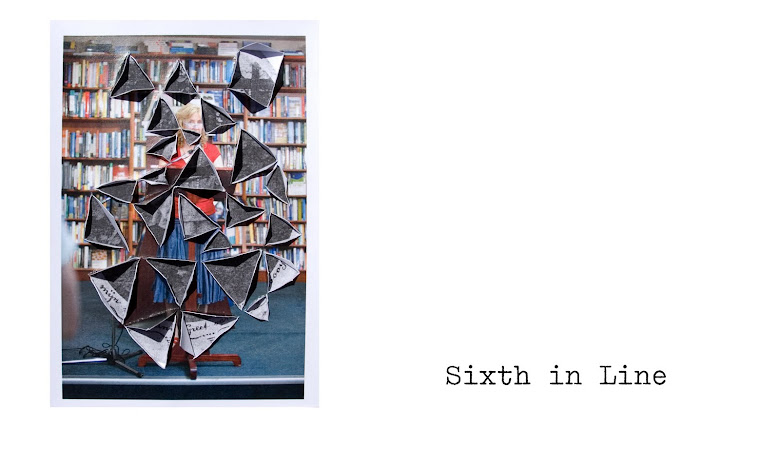
This brings me to my sixth obsession: connection. I long for connection, a sense of getting through to another person however momentarily, a sense of sharing, a glimmer of intimacy where we can share an affinity and a sense of at oneness, again however illusory.
Connection is illusory. It is like the truth, it is something we can only sense, we can only glimpse, we can only hold close to us in our minds, but it can never be grasped firmly. As soon as we try to get too firm a grasp on it we lose it.
Connection turns to possession, possessiveness; and truth turns to doctrine. Doctrine is dangerous, as is possessiveness. We must hold loose to our loves. I suspect it is our hates that enable us to do this.
Have I run out of obsessions? Perhaps the list should end here.
And you? Do you, too, write into your obsessions? Can you share yours?
For me this list becomes a deep and endlessly fascinating source of ideas and I thank Lynn Freed for sharing her friend's suggestion.
Subscribe to:
Posts (Atom)