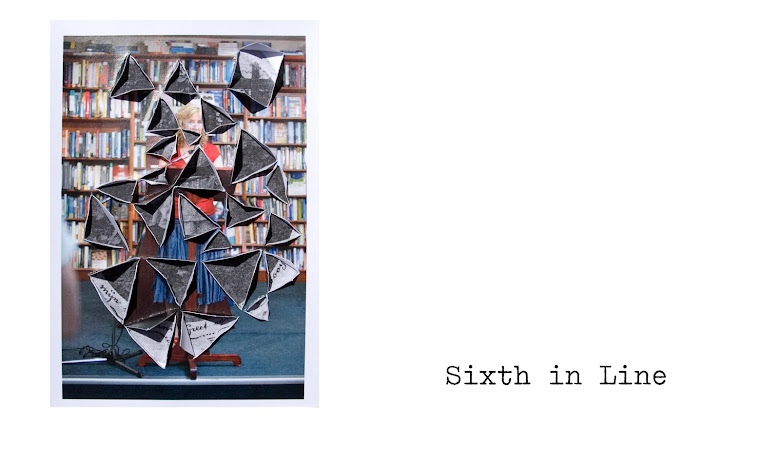
My Dutch grandmother, a woman of scruples, a woman who held
fast to her religious beliefs even under pressure, kept camphor balls in her apron pockets during
her pregnancies.

An uncle told me this recently, when I visited him in his
retirement home, this uncle, my mother’s younger brother, and one of the only two
left now of my mother’s large sib ship of seven.
I had read a short memoir of his childhood, and somewhere the
words:
‘The unusual habits of mother during her pregnancy,
especially in her choice of food, made her vitamin deficient and could have
given her children a form of rickets as our dentist pointed out.’
I was curious, and asked my uncle about his mother’s strange
eating habits and he talked about the lack of vitamin D from the harsh long
winters in Holland and how his mother fed her family cod liver oil.
He did not mention her eating habits, only this peculiarity.
He did not mention her eating habits, only this peculiarity.
My uncle described how from time to time, as his mother went
about her housework duties, she dipped her hand into her pockets and pulled out a
camphor ball. Then she put it to her
nose and breathed in deeply, as if from a snuff box, but only when she was pregnant,
my uncle told me, and only when she had those strange cravings that pregnant women can
have, not otherwise.
It seemed an odd habit for a woman of scruples, a woman whose
religious observances bordered on the extreme.
Mass every day even in the snow and cold and the rosary every
night.
She was an expert at self-denial.
Self-denial takes practice.
I remember when I first decided to get a grip on my television watching
as a thirteen year old. I sat in the
classroom and the Latin teacher, Mother Eleanor, was going on about the
importance of learning our verbs. About
the importance of putting aside time every night to practise them.
I pitched myself in my mind to the end of the day. I saw myself come home. I saw myself go into the kitchen and spread at
least four slices of bread with margarine and jam, then I went to the lounge
room where my brothers were already stuck in front of the television and I
joined them.
I put my sandwiches on the arm of my chair and eat sandwich
after sandwich as first Bugs Bunny, followed by the likes of Daniel Boone or
Robin Hood flashed across the screen. Then
my father came home and I bolted, along with everyone else, no longer hungry
for dinner, no longer keen on sitting together as a family, but having to go
through the dinner ritual regardless.

During the Latin lesson that day I decided I would stop
watching television. I would give myself
time from the moment I came home to do my homework and then I would get good at
Latin.
I would deny myself for a greater good.
They’ve done experiments with small children where they sit each
child in front of a lolly and tell them that if they can resist taking that
lolly for five minutes – not sure exactly how long, but about five minutes –
then they can have two.
The researchers do this test to demonstrate the development of
impulse control and of will power.
Some kids can do it. They can hold out for the greater reward but others
cannot. They want it now.
When I shop with my husband for some item that is of
significant value, a new chest of drawers for instance, or a computer upgrade
or some such thing, he likes to look, to compare, to consider and then to go home empty
handed, with the intention of returning the next day or the day after that once
he’s satisfied this is the best thing to buy.
Me. I see it. I examine it and think about it. I reckon it’s okay. Enough value for money, a good quality
product, it will do the job. I want it
now. Why wait till tomorrow or the next
day to buy it when we agree we need it and can have it now?
In this way we are different.
But over the years I have noticed some of my husband’s caution has crept
into me and some of my impulsiveness erupts from him. Just some.
My husband is still a great one for window-shopping. It’s nothing for him to go off to a farmer’s
market and come home with some small token, a bunch of radishes for instance,
whereas if I were to go to said farmer’s market I’d feel almost compelled to
buy stuff we might not need, stuff that interests me perhaps, expensive butter
from nearby farms, venison from a local supplier. We might eat it eventually but we do not need
it.
I will want to buy something for our children, too, but my husband is happy to feast his eyes on
the displays and come home empty handed.
And then I get to another part of my uncle’s memoir where he
talks about his mother’s response to the fact that five of her seven children
left home as young adults to live far away in Australia, in New Guinea and in Brazil.
‘Every time somebody leaves, it takes away a piece of my
heart,’ my Dutch grandmother said. And no amount of
scruples, impulse control or camphor ball sniffing can stop her heart from
breaking.

