Wednesday, December 24, 2014

Peaceful, my eye.

Just this morning, like a woman possessed, I drove across town to buy a kilo of pipis, otherwise known as clams, which I could not find anywhere locally, when I shopped yesterday. My husband plans to prepare a Spanish dish, Salpicon de mariscos, for our christmas day lunch

Half an hour's drive from home, I stood with several other people in an orderly queue on Nicolson Street in Carlton.  The people at Canals, the fish mongers, are clever.  They have crowd control in the form of a woman who stands at the door with a clipboard and list of orders to be collected.  She fills out a slip for each of those who arrive to collect their order and ushers in the others, like me, who come to order off the cuff, one at a time.  

And so I managed to buy my pipis, which put me in mind of the days before we were aware of environmental sustainability, when we fished for clams in the sand off Venus Bay and collected buckets full of these tiny hard shelled morsels to make dishes fit for royalty.  

These days seafood is not cheap, but it was worth the effort.  Even as I felt so much a part of the privileged mainstream lining up for seafood on a Christmas Eve morning.  

We have just now passed our summer solstice, that time of the year when day and night are equally divided and after which things begin to head in the opposite direction.  From here the downward trend to winter. 

It’s hard to think of winter when it’s so humid and hot here, not as hot as it will get, but my thoughts turn to winter.  

My youngest daughter will soon head out into the cold of Europe.  She plans to spend six months studying at the University of Edinburgh. 

Take note, my good friend, Jim.  One of mine is coming over to your part of the world. 

I’m a little unsettled at the thought – not simply of my daughter on the other side of the world – but the distance between. 

And then there’s the usual build up to Christmas, the pressure to get things done before the day which some of us celebrate, while others do not.  

I am so much more sensitive these days to variations in practices, those who celebrate Christmas and those who celebrate other events.  All of them equally important to the celebrant.  

There are buckets of conflictual happenings in my part of the world.  A siege in Martin Place in Sydney where three people, the perpetrator and two of his many victims, lost their lives.  Two people in the wrong place at the wrong time and elsewhere in Australia, in Cairns, a mother killed seven of her children and one of her nieces in what could have been an Ice-driven attack or some other madness.  

However does a woman manage to kill eight children, aged between fourteen and two, except under some crazed influence.  These events have cast a pall over our otherwise generally peaceful world. 

Peaceful, my eye.  It’s just that most of the conflict goes on behind the scenes, out of eyesight, out of the newsworthy range.  


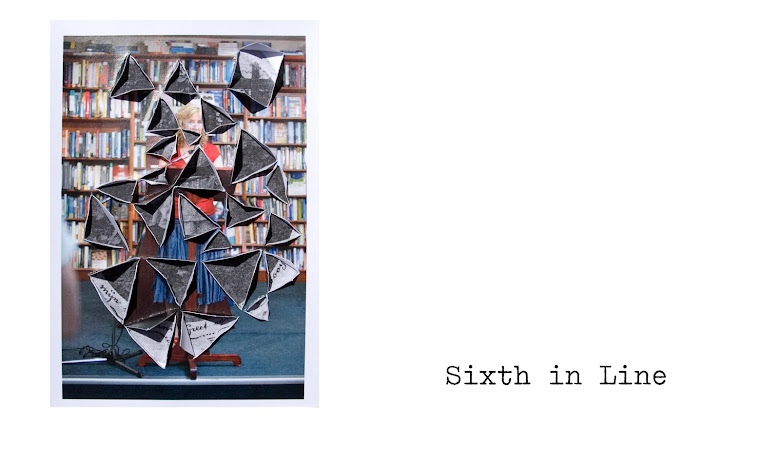
And a lemon-scented myrtle in a large pot glows in our living room.  Don’t be mistaken by the celebratory birds, they are not as one daughter suggested ‘dead pigeons’.  They are papier mache birds with silver sprinkles on their backs and black beads for eyes.  

A sign of peace.  


Sunday, December 21, 2014

War


War hangs like a crucifix around my neck,
Behind double brick walls.
In leafy Camberwell.
Where men mow lawns and women cook meals.
Men in suits, office bound.
Women in dresses, children bound.
Australia in the fifties.
Behind double brick walls.

Saturday, December 13, 2014

The darker the better

I once held a job at the general post office in the city, a holiday job, my first ever job between the completion of my final year at school and the Christmas holidays. 

Before they set us to sorting letters the bosses asked us to fill out forms and swear allegiance to the queen. We were sworn in as public servants and required to obey codes of confidentiality, integrity and honesty.  We might see things in the mail that we were not meant to see, or that might unsettle us or could be dangerous. We were to report to our superiors anything that looked suspicious and for the rest we were to sort. 

Thousands of envelopes, all shapes and sizes, spat at us from different directions and we sorted them by postcodes.  People did not routinely include their postcode with each address then, so it was for us to learn the area codes of each suburb and sort accordingly.

I dreamed numbers at night in my sleep and my fingers dried out for the spreading of letters.  I was shy.  I did not speak to my fellow workers.  All that allegiance for only two weeks and then came Christmas Eve, my job ended and I walked out to Flinders Street station with my first ever pay packet.  A wad of cash in a rectangular yellow envelope with a typed out pay slip that detailed my hours and status, casual and temporary. 

We lived in Parkdale near the sea.  On that last day I took the train home and walked into the house, which we never locked on the premise there was nothing inside worth stealing and called out to which ever of my sisters or brothers might be at home, but there was no one there.  I went outside to catch the last of the sun.

In those days, as soon as the sun brought with it a hint of heat, I made it my business to spend at least ten minutes almost naked under it.  Ten minutes to begin with, gradually building up the time spent in the sun to prepare my skin for its transformation from the white of winter into the golden glow of the warm months. 

It played on my mind.  If there was ever a day when I could not get outside into the back garden hidden from view or later to a nearby swimming pool then I became anxious.  

I would not be able to appear on the street in summer unless my skin was tanned.  Unlike my older sister whose skin, like our mother’s, held an olive glow, my skin took after my father’s, pale and prone to freckles.  At least if I followed my older sister’s tanning instructions and spent the requisite number of minutes building up each day then I did not burn red but instead turned to copper.  The darker the better.

Every summer the same requirement.  To spend more hours in the sun than was available.  I did not question this need to tan.  I did not challenge the unspoken orthodoxy that demanded my body become a respectable brown before I could expose any of it to public view.  It was a given.  Others joined me in this requirement.  Even as my mother went on about an aunt who spent entire holidays on the beach.
‘Her skin will go wrinkly.  She spends too much time outside.’ 

Even as I could not fathom the right amount of time to spend in the sun, to grow into an ideal brown, not too brown or I might be mistaken for an aboriginal and my skin would wrinkle as much as if I were an eighty year old, I knew I still needed to get to that optimal colour.

And then slip, slop, slap came in, and with it, the fear of skin cancer and they changed all the rules.                     

Sunday, December 07, 2014

Out of wedlock

Yesterday, we sat in a circle in the lounge room of a cousin who lives near the beach at Sandringham where we commemorated the life of another cousin, who died ten days ago on the other side of the world in Holland, at the age of sixty five. 

I did not know this cousin well.  She was older than me and our paths rarely crossed, apart from during my brief visits to Holland and hers to Australia, but she is lodged forever in my memory and imagination. 

I don’t remember when my mother first told me that this cousin had been born out-of-wedlock.  Such a loaded expression ‘wedlock’, as if the institution itself is some sort of guarantee of imprisonment or security. 

My cousin was born in 1949, not long after the Second World War, and she lived then with her mother and for a short time, her father, who at the time was married to another woman.  He did not stay around for long. 

Imagine this at a time when illegitimacy and infidelity in marriage were far more unacceptable than today. 

We have such a craving for certainty in life, such a desperation that people and events meet our expectations and we look down on those who fail to comply. 

On another note, in my large extended family, the children of my many siblings, there is one in particular to whom I draw your attention.  She has joined me in keeping a blog.

Hers is a special blog because it deals with life and death at its core. 

I don't want to speak for my niece other than to draw you to her blog, A Loquat Tree.  She speaks well enough alone.  

Maybe if someone visiting here reads this blog, they might find a way of helping us all in the vast blog community to find a cure. 

I’m big on people working together, as much as I also snuggle into the notion that conflict is a good thing.  It’s necessary in order to allow for growth.  It’s not the conflict itself but the way it’s handled that determines its ability to be constructive.

And I am in conflict about sharing this blog with you because of other peoples’ sensitivities and concerns about privacy, but it seems important to go ahead anyhow.

I talked with one of my sisters yesterday, a sister and a Facebook friend, and she joked about my predilection to go on political rants, particularly in aid of asylum seekers. 

I thought then maybe I should stop shouting in order that my message be better heard. 

But in these two instances, that of my niece and the asylum seekers, I’m not shouting for myself alone. 

I’m shouting for all those of us who are vulnerable, who struggle and for whom life has dealt a rum hand. 

It could happen to you, or me or anyone of us, but these people by dint of circumstance - fate, chance, accident, whatever - find themselves in impossible situations, and they must deal with them as best they can.

As always, it helps to share the load. 


And then like my Dutch cousin, who – despite, or maybe because of her tough beginning in life – was a wonder at helping others, we die. 

Tuesday, December 02, 2014

A trip to the beach

Here's the short story I posted about earlier.   You might like to read them all.  Mine's second in line.

http://www.lanecove.nsw.gov.au/Community/Library/Pages/LaneCoveLiteraryAward.aspx