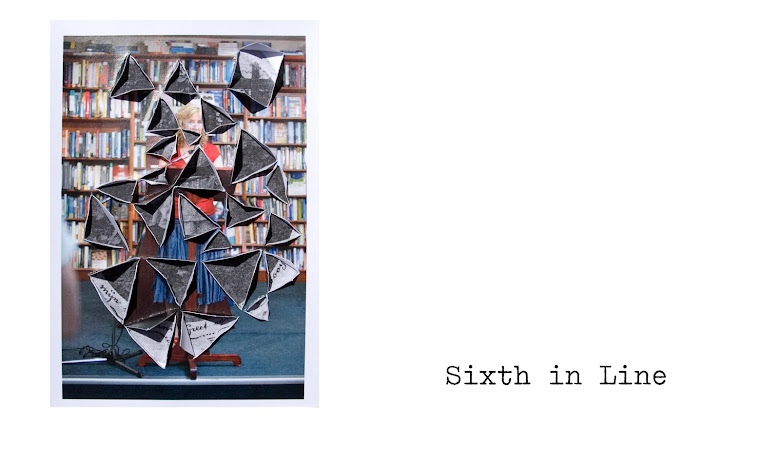
It’s the oddest sensation to find yourself in the pages of someone else’s story. My friend Carrie Tiffany – I mention her by name because she is a writer and has published a story and therefore presumably does not need to remain anonymous, as so many others do – has written a story in which she includes a brief description of a time we spent together several years ago now.
It’s a sympathetic portrait and there’s nothing in it to feel ashamed about. Carrie had mentioned it to me even as she was writing the story out of concern for my sensitivities. The vignette is merely a side tributary on the river of this wonderful story, which is well worth reading.
Many years ago when I discussed some of my concerns about writing about my siblings and how they might feel, my then writing teacher asked if I’d ever been written about. As if I could only judge the experience through my own experience.
It’s the oddest sensation. That’s me there on the page, the ‘Liz’ a peripheral character, who in Carrie's story spells her name with ‘z’ and not an ‘s’, that’s me, and yet it’s not me at all. I’ve been fictionalised.
It’s a me from the past, snap frozen in time, a tiny cameo of my husband and me, one winters day, I say winter because if it was written six months after my husband’s heart attack, then it must have been the wintertime, but it could just have easily happened in the summer.
I write about this experience here now because I am pondering the issue of finding yourself described in someone else’s pages and how unsettling this can be, however much we know it to be fictionalised. I’m also wondering about the degree to which all creative writing however much it is described as non-fiction and allegedly therefore based on the so-called truth is in fact a fiction.
The minor characters, Liz and Bob, in Carrie’s story are fictional characters however much based on real life characters. We know this and yet we tend to argue in polarities. Either it’s true – non-fiction, or it’s not – and therefore its fiction.
It can’t be both, and yet it is both.
And here I intersperse a photo break, a poorly captured image of my husband and me on our wedding day, to add to Carrie's image of Liz and Bob well before any of this happened.
I enjoy featuring in Carrie’s story because it gives me a different perspective of myself. Is that how I look/looked to her then. She ascribes such kind motives to me. It’s true I had wanted to reassure her in some way about her heart, as I believe had my husband, but I think I am not as benign as Carrie’s Liz comes across.
Even the fact that I write about this now makes me wonder whether it’s not a sort of retaliation. You write about me and I’ll write about you. But now I write about a real person who is also a fictional character and quake inside because Carrie reads my blog.
I’m giving a talk in a couple of weeks on the topic of ‘Auto/biography’: an excess of fiction or in excess of it? As chance would have it, and chance/serendipity is such a wonderful companion, my copy of William Michaelian’s, A Listening Thing, arrived during the week.
I opened the first pages and found these wonderful words in his preface. ‘We can’t escape the fact that life is fiction, and fiction is life – a point upon which science and the practical mind are tragically confused. The practical mind says, ‘That which is imagined does not really exist’ and science which wears matching socks even on weekends, trots out any number of laws to support this bland assumption. But laws are yesterday’s news, placeholders until something even more sensible comes along. Then we laugh at the old laws, just as if an alien race had made them, a race comprised of beings not nearly as smart as we – while, thanks to laws and our adherence to them, and worship of them, we have forgotten more of value than we will ever know, which is to say an arrogant, universal thimbleful.’’
So William too writes about a fictional character, Stephen Monroe, who is also himself, the author and narrator, William Michaelian, but at the same time not himself.
If this stuff ties you up in knots I’m not surprised. I find myself twisting over myself in trying to find a way of describing something that seems so intangible.
Why does it make us flinch to be written about? According to Helen Garner, ‘it’s not so much the revelation of fact, as the feeling that somebody else is telling your story, and stating something without the justifying tone that you use yourself...You feel stripped and bare and you can’t say “Oh well that’s just me,” in that cosy way that one does.’
When someone writes about you, they use their own words, their own impressions. They look at you from the outside, whereas you can only see yourself from the inside. You can only imagine how you might come across.
When I read about myself on the page, it’s like looking into one of those distorted mirrors you find at a circus. There’s one in the children’s section at the Melbourne Museum. I went there during the week with my grandson and we looked at ourselves reflected there. Three mirrors flowed down the wall, the one flat, the other convex, and the third concave.
In the two distorted mirrors we saw ourselves, stunted and deformed, too tall in the neck, too short in the torso, and as we giggled and danced in front of our images, they became even more deformed.
We came back three times. To be able to contort our self image into so many odd shapes and sizes gave us great pleasure, the same pleasure I find when I or someone else uses my form and tries to shape me into something that is not quite how I see myself from the inside.
But even myself inside feels like that person in the mirror, too long here, too wide there, a leery grin here, eyes too big in my head there, a caricature of myself, whoever she is, in all her many manifestations.
I came into the kitchen just now, early morning and no one else is awake as yet, and found one of the cats chewing on the remains of what looked to be a mouse. I approached with the intention of retrieving the mouse. For some reason I do not enjoy the sight or sound of a cat munching on mice bones.
The cat let our a low growl. He wasn’t giving up his prey so easily. In the end I left him to it, but wondered why with full bowls of perfectly produced shop bought cat food, the stuff the cats generally prefer, the stuff that comes in tins from the supermarket, should this cat prefer his own caught mouse, disgusting bones and all?
I’m not a cat. I cannot say, but perhaps it’s the same as in the writing process. We land on something and cannot let it go. We gnaw away at it or it gnaws away at us and will not let us be.
Have you ever been written about? How was it for you? Disarming, disturbing, delightful? Or something else altogether? Anything’s possible.
Showing posts with label William Michaelian. Show all posts
Saturday, September 10, 2011
Saturday, May 15, 2010
Autobiography is not Confession.
Recently at a seminar, after I had presented a paper on Straddling Two Worlds, about my difficulties of working both as a therapist and as an auto biographer, an audience member asked about the need to question the impact of autobiographical/confessional writing.
Initially I was flummoxed by her question, and disturbed by her insistence that we should interrogate the value, and the consequences of the impact of confessional writing on others who might also be involved and on readers.
I am hazy about the exact nature of her question and comments, only that they have continued to rankle over the past few days. They rattle around in my head like so many loose bullets about to explode.
And then it came to me. I object to her use of the word ‘confessional’. I object to people using the word ‘confessional’ as if it is synonymous with ‘autobiographical’.
I have made my confession many times in my early life, from the time I was seven years old when I went for my first holy confession, to the time I was nineteen years old when I gave it all away.
‘Bless me father for I have sinned. It is one month since my last confession. I accuse myself of…’ I then manufactured safe sins, sins like telling lies twice, stealing once, and disobedience.
The sin of disobedience sat uncomfortably. I was an obedient child. Other people disobeyed. Not me, not then. But in confession it seemed safer to admit to disobedience than to mention my real sins, my sins of impurity.
I convinced myself that ‘hell fire and damnation’ awaited me at the end because from the time I was twelve years old, from the time I noticed my body changing, from the time I felt the first rush of desire towards my own body and that of another, I was tortured. These were the sins to which I could not admit. If I were to admit such sins to the priest, questions would follow.
How did I know this? How did I know that the priest would ask questions about my impure thoughts and that he would not otherwise bother to inquire into my sins of theft, dishonesty and disobedience?
I learned early, the day I took hold of a man’s penis under the bridge that spanned Canterbury Road, after which the man gave me sixpence because I did as he had asked - I held his penis and watched the cream come out.
I have written long stories about this moment in my life, this moment when I first took hold of a man’s penis. I kept it secret at the time from my sister and my brother who had come along with me on this outing and who had wandered off when the man called me over. The next day I told my mother about it. My mother suggested I take the details to confession. It was then I decided my sin must be serious.
For the uninitiated, confessional boxes are like coffins standing on end, narrow dark closets, in which you are immediately faced with a wooden paneled wall after you walk through the door and there is room only for you to kneel. At eye height once on your knees, there is a grille that the priest slides open when it comes your turn to confess. There is a confessional box on either side of the central chamber in which the priest sits. You speak into the grille hot and breathless and the priest mumbles and murmurs.
The only time a priest ever questioned me about my sins was after I told him about the man whose penis I had held.
What did you do? What did the man do? The priest asked. He wanted all the details.
Usually after I had confessed to my sins, the priest offered easy absolution, a few Hail Mary’s, an Our Father. But this time, he ordered an entire decade of the rosary. I concluded my sin was enormous. And thereafter I shied off telling a priest in confession anything other than my rote learned mandatory sins.
This long digression into my early confessional experience is my attempt to tell you that confession is the place in which you admit to your sins. Autobiography is the place in which you write about your life. The two are not synonymous.
My life as I write it is not simply a list of my sins. I hope I have the courage to bear witness to my mistakes and misdemeanors in my writing if necessary but that is not all that I write. I do not confess my sins in my writing. I am not on the lookout for absolution or redemption. I do not want forgiveness.
If I were confessing my sins here on the page then I would turn my readers into my priest, the one who passes judgment on behalf of God, who can decide whether I am worthy of forgiveness and how I might go about gaining that forgiveness.
As William Michaelian says in a comment on Paul L. Martin's post, Looking around the Blogosphere, on The Teacher's View blog,
'I want what all writers, artists, and human beings want, whether they publicly admit it or not: I want to be understood; I want to be appreciated; I want to be known and recognized in my lifetime...'
I do not want to confess my sins. I want to share my story.
Initially I was flummoxed by her question, and disturbed by her insistence that we should interrogate the value, and the consequences of the impact of confessional writing on others who might also be involved and on readers.
I am hazy about the exact nature of her question and comments, only that they have continued to rankle over the past few days. They rattle around in my head like so many loose bullets about to explode.
And then it came to me. I object to her use of the word ‘confessional’. I object to people using the word ‘confessional’ as if it is synonymous with ‘autobiographical’.
I have made my confession many times in my early life, from the time I was seven years old when I went for my first holy confession, to the time I was nineteen years old when I gave it all away.
‘Bless me father for I have sinned. It is one month since my last confession. I accuse myself of…’ I then manufactured safe sins, sins like telling lies twice, stealing once, and disobedience.
The sin of disobedience sat uncomfortably. I was an obedient child. Other people disobeyed. Not me, not then. But in confession it seemed safer to admit to disobedience than to mention my real sins, my sins of impurity.
I convinced myself that ‘hell fire and damnation’ awaited me at the end because from the time I was twelve years old, from the time I noticed my body changing, from the time I felt the first rush of desire towards my own body and that of another, I was tortured. These were the sins to which I could not admit. If I were to admit such sins to the priest, questions would follow.
How did I know this? How did I know that the priest would ask questions about my impure thoughts and that he would not otherwise bother to inquire into my sins of theft, dishonesty and disobedience?
I learned early, the day I took hold of a man’s penis under the bridge that spanned Canterbury Road, after which the man gave me sixpence because I did as he had asked - I held his penis and watched the cream come out.
I have written long stories about this moment in my life, this moment when I first took hold of a man’s penis. I kept it secret at the time from my sister and my brother who had come along with me on this outing and who had wandered off when the man called me over. The next day I told my mother about it. My mother suggested I take the details to confession. It was then I decided my sin must be serious.
For the uninitiated, confessional boxes are like coffins standing on end, narrow dark closets, in which you are immediately faced with a wooden paneled wall after you walk through the door and there is room only for you to kneel. At eye height once on your knees, there is a grille that the priest slides open when it comes your turn to confess. There is a confessional box on either side of the central chamber in which the priest sits. You speak into the grille hot and breathless and the priest mumbles and murmurs.
The only time a priest ever questioned me about my sins was after I told him about the man whose penis I had held.
What did you do? What did the man do? The priest asked. He wanted all the details.
Usually after I had confessed to my sins, the priest offered easy absolution, a few Hail Mary’s, an Our Father. But this time, he ordered an entire decade of the rosary. I concluded my sin was enormous. And thereafter I shied off telling a priest in confession anything other than my rote learned mandatory sins.
This long digression into my early confessional experience is my attempt to tell you that confession is the place in which you admit to your sins. Autobiography is the place in which you write about your life. The two are not synonymous.
My life as I write it is not simply a list of my sins. I hope I have the courage to bear witness to my mistakes and misdemeanors in my writing if necessary but that is not all that I write. I do not confess my sins in my writing. I am not on the lookout for absolution or redemption. I do not want forgiveness.
If I were confessing my sins here on the page then I would turn my readers into my priest, the one who passes judgment on behalf of God, who can decide whether I am worthy of forgiveness and how I might go about gaining that forgiveness.
As William Michaelian says in a comment on Paul L. Martin's post, Looking around the Blogosphere, on The Teacher's View blog,
'I want what all writers, artists, and human beings want, whether they publicly admit it or not: I want to be understood; I want to be appreciated; I want to be known and recognized in my lifetime...'
I do not want to confess my sins. I want to share my story.
Saturday, April 17, 2010
Why I write autobiography.
I read a short piece in the New Yorker review of books yesterday in which Janet Malcolm talks about the difficulties of writing her own autobiography. How hard it is to keep out the excess detail that would most likely be of interest to the auto biographer only.
It is easier for a journalist or biographer, she writes. The distance and objectivity required enables the writer to pick out the salient pieces, the things in the life story that will keep the reader interested, and will keep the story rolling along.
When you write your own story you are far more likely to get stuck in the mire of details from your life, details that become tedious and irrelevant to your reader, however riveting they might seem to you.
The difficulties of writing autobiography multiply.
To begin with there is the business of being bound to 'write the truth, the whole truth and nothing but the truth'. An impossible task, given there is no such thing as absolute truth, only multiple variations of it, and multiple perspectives.
The literature abounds these days with the discounted evidence of people who claimed they were telling the truth of their stories, when the facts of history disproved their claims. They may have written a good story but they betrayed their readership by claiming it to be true, when it was not.
Beyond writing the truth, autobiographers are also obliged to focus on their own lives. And given that it is impossible to write about yourself without including details of other people's lives, then autobiographers must consider disguising those others to such an extent that they cannot be identified. To disguise your fellow travelers in life is to begin to write fiction.
I once wanted to write about my siblings from the perspective of the lives of the saints after whom they were each named. To write in this way would demand that I use their first names. I could not therefore write about them, though I was safe enough to write about my own patron saint, Elisabeth of Hungary. I would tell you the story here, but I digress.
So now we arrive at the first catch twenty two: write the truth but keep bits of it hidden, particularly the identities of those who wish to remain concealed. To establish the identities of those who might wish to remain concealed is to alert them to the possibility that you might write about them. This opens up Pandora's Box.
If you do a run around among your siblings, parents, friends and close others about how they might feel were details of your memories of your life together included, you are likely to fall into thorny bushes. And, as Drusilla Modjeska once wrote to me, there are those whom you expect to object who will not, and those whom you imagine to be in support, who will be furious. You cannot predict.
I once wrote a series of letters to my nine siblings suggesting that we cooperate in the writing of a book. We could each write a chapter on what it was like growing up in our ‘troubled’ family. The book never eventuated. We could not cooperate. Besides, I am a middle child, sixth in line. How could the editorial role fall to me, someone in the lower echelons of family chronology, and a girl to boot? How could I be permitted to take on such a task? How could I be deemed the arbiter of what gets included?
The advantage for a woman of my generation, who is more likely to have changed her name in marriage, is that the details of her family name are obscured and therefore less likely to become an issue in the disclosure stakes.
Most teachers of writing will tell you just to get on and write it first, worry about how you publish later.
The joys and dangers of blogging are that less of this process needs to take place. It is rather like going to a bakery where the bread is fresh out of the oven, rather than going to the supermarket where the bread has been standing around for hours going through the process of being sliced, bagged, labeled and transported to supermarket destinations near and far way. The latter bread tastes more predictable and bland but it is safer perhaps, albeit more doctored, than the stuff fresh out of the baker’s tray.
Which is another rule of successful autobiography: the rule of keeping it vital, which as Janet Malcolm points out, involves a degree of exclusion and a level of fictionalising that clashes with the first rule of ‘telling the truth’.
The next accusation to be leveled at the autobiographer involves that of narcissism. What makes you think your life is so interesting that anyone else would want to read about it? Who do you think you are?
You do not hear such arguments leveled against artists who paint their self-portraits regularly, who examine the intricacies of their form and with flourish. These self-portraits are rarely considered narcissistic, at least not as far as I have heard. Artists can include a life long chronology of their self-portraiture and no one bats an eyelid, but loves to see the progress. No such indulgence is offered to the unwary autobiographer who repeats herself, whose self image changes over time, and who is inconsistent in her self appraisals and perspectives of others.
It is one thing to write about the past, especially the far distant past, ten years ago and more. There is a certain sense of completion to events that happened then. We have had time to think about these experiences, to reflect on them and every time we do, they change a little.
Memory is like that. Every time we remember an event we reformulate it. We tweak it at the edges. We offer it more internal and logical sense than it might have had at the time.
As Timothy Garton Ash writes memory is like a re-write able CD, each new version replaces the last. And we all know that memory is unreliable and prone to distortion.
When we write about the present the task is even harder. Our memory for recent events is likely to be better. We can embellish the details more effectively. We can remember more precisely the exact curve in the teacup and the way her hair curls on top, but the experience is all too close. It feels raw. It has little of that sense of completeness that comes out of our continual revisions - both conscious and unconscious - and therefore it is prone to exaggeration and distortion.
Besides the people who participated in the recent events described are far more likely to be around at the same time and their memories of the event are also fresher. They might have a different view and disagree with yours, or they might not yet be ready to reflect on the experience.
So it was for me when I wrote about my daughter’s wedding too soon after the event and posted it on my blog. She had not realised that I had felt so hassled on the morning of the day. Why hadn’t I talked to her about it? she asked. Why had I chosen to write about it on my blog? Why had I included details that might identify her?
My blog is too public. I can be too readily identified. I should conceal my identity and not let anyone else in the blogosphere know who I am in real life.
‘The people who blog are not all who they say they are,’ another daughter tells me. ‘You can’t talk about those people in blogdom as real, because there is every chance they are not.’
I am torn. What would it be like, I wonder, to write under a veil of anonymity? To write under a pseudonym? To write as though my name were not my name. To write as though I were someone else.
I have not yet been able to do this effectively. I have tried to write fiction. I have tried to write about events that come from the well of my imagination, but they are always events that have been part of my experience. I might give over the events to various made up characters, but they too come from my experience.
I cannot write into the complete unknown, but I admire those whose imaginations are so robust that they can.
I am stuck with the so called ‘reality’ of my world, its past and its present. I feel handicapped by this and yet I cannot write about any other world or place and time. Only the world I know. When I imagine other worlds, invariably I remember them through the lens of my own experience.
I do not write the truth, the whole truth and nothing but the truth, only variations on it. I write from my experience but the events I describe are based on memories of times gone by, even if they only happened yesterday, and in so doing I embellish these events, I reconstruct them.
I do not lie, but it is not the absolute truth and my perspective can vary depending on from which part of me I write. For I am as multiple in my perspectives as are those other participants in the same events.
Now I will tell you why I refuse to travel incognito, even on this blog where my adult children warn me I should be more careful. I should conceal my identity; I should hide the 'truth' of myself.
I grew up in a family in which we were told to ‘do as if nothing is wrong’; ‘keep it to yourselves’; ‘don’t let the neighbours know’; ‘hide’.
I write to escape these injunctions.
I write to reorder and thereby to create some illusion of control, to redress wrongs, to turn my helplessness into strength, to expose the wrong doers in my life, including my own wrong doings and to offer another perspective, one that can be reworked again and again into another version of the same events by other writers and participants to come.
Through my writing I can both hide and reveal.
It is easier for a journalist or biographer, she writes. The distance and objectivity required enables the writer to pick out the salient pieces, the things in the life story that will keep the reader interested, and will keep the story rolling along.
When you write your own story you are far more likely to get stuck in the mire of details from your life, details that become tedious and irrelevant to your reader, however riveting they might seem to you.
The difficulties of writing autobiography multiply.
To begin with there is the business of being bound to 'write the truth, the whole truth and nothing but the truth'. An impossible task, given there is no such thing as absolute truth, only multiple variations of it, and multiple perspectives.
The literature abounds these days with the discounted evidence of people who claimed they were telling the truth of their stories, when the facts of history disproved their claims. They may have written a good story but they betrayed their readership by claiming it to be true, when it was not.
Beyond writing the truth, autobiographers are also obliged to focus on their own lives. And given that it is impossible to write about yourself without including details of other people's lives, then autobiographers must consider disguising those others to such an extent that they cannot be identified. To disguise your fellow travelers in life is to begin to write fiction.
I once wanted to write about my siblings from the perspective of the lives of the saints after whom they were each named. To write in this way would demand that I use their first names. I could not therefore write about them, though I was safe enough to write about my own patron saint, Elisabeth of Hungary. I would tell you the story here, but I digress.
So now we arrive at the first catch twenty two: write the truth but keep bits of it hidden, particularly the identities of those who wish to remain concealed. To establish the identities of those who might wish to remain concealed is to alert them to the possibility that you might write about them. This opens up Pandora's Box.
If you do a run around among your siblings, parents, friends and close others about how they might feel were details of your memories of your life together included, you are likely to fall into thorny bushes. And, as Drusilla Modjeska once wrote to me, there are those whom you expect to object who will not, and those whom you imagine to be in support, who will be furious. You cannot predict.
I once wrote a series of letters to my nine siblings suggesting that we cooperate in the writing of a book. We could each write a chapter on what it was like growing up in our ‘troubled’ family. The book never eventuated. We could not cooperate. Besides, I am a middle child, sixth in line. How could the editorial role fall to me, someone in the lower echelons of family chronology, and a girl to boot? How could I be permitted to take on such a task? How could I be deemed the arbiter of what gets included?
The advantage for a woman of my generation, who is more likely to have changed her name in marriage, is that the details of her family name are obscured and therefore less likely to become an issue in the disclosure stakes.
Most teachers of writing will tell you just to get on and write it first, worry about how you publish later.
The joys and dangers of blogging are that less of this process needs to take place. It is rather like going to a bakery where the bread is fresh out of the oven, rather than going to the supermarket where the bread has been standing around for hours going through the process of being sliced, bagged, labeled and transported to supermarket destinations near and far way. The latter bread tastes more predictable and bland but it is safer perhaps, albeit more doctored, than the stuff fresh out of the baker’s tray.
Which is another rule of successful autobiography: the rule of keeping it vital, which as Janet Malcolm points out, involves a degree of exclusion and a level of fictionalising that clashes with the first rule of ‘telling the truth’.
The next accusation to be leveled at the autobiographer involves that of narcissism. What makes you think your life is so interesting that anyone else would want to read about it? Who do you think you are?
You do not hear such arguments leveled against artists who paint their self-portraits regularly, who examine the intricacies of their form and with flourish. These self-portraits are rarely considered narcissistic, at least not as far as I have heard. Artists can include a life long chronology of their self-portraiture and no one bats an eyelid, but loves to see the progress. No such indulgence is offered to the unwary autobiographer who repeats herself, whose self image changes over time, and who is inconsistent in her self appraisals and perspectives of others.
It is one thing to write about the past, especially the far distant past, ten years ago and more. There is a certain sense of completion to events that happened then. We have had time to think about these experiences, to reflect on them and every time we do, they change a little.
Memory is like that. Every time we remember an event we reformulate it. We tweak it at the edges. We offer it more internal and logical sense than it might have had at the time.
As Timothy Garton Ash writes memory is like a re-write able CD, each new version replaces the last. And we all know that memory is unreliable and prone to distortion.
When we write about the present the task is even harder. Our memory for recent events is likely to be better. We can embellish the details more effectively. We can remember more precisely the exact curve in the teacup and the way her hair curls on top, but the experience is all too close. It feels raw. It has little of that sense of completeness that comes out of our continual revisions - both conscious and unconscious - and therefore it is prone to exaggeration and distortion.
Besides the people who participated in the recent events described are far more likely to be around at the same time and their memories of the event are also fresher. They might have a different view and disagree with yours, or they might not yet be ready to reflect on the experience.
So it was for me when I wrote about my daughter’s wedding too soon after the event and posted it on my blog. She had not realised that I had felt so hassled on the morning of the day. Why hadn’t I talked to her about it? she asked. Why had I chosen to write about it on my blog? Why had I included details that might identify her?
My blog is too public. I can be too readily identified. I should conceal my identity and not let anyone else in the blogosphere know who I am in real life.
‘The people who blog are not all who they say they are,’ another daughter tells me. ‘You can’t talk about those people in blogdom as real, because there is every chance they are not.’
I am torn. What would it be like, I wonder, to write under a veil of anonymity? To write under a pseudonym? To write as though my name were not my name. To write as though I were someone else.
I have not yet been able to do this effectively. I have tried to write fiction. I have tried to write about events that come from the well of my imagination, but they are always events that have been part of my experience. I might give over the events to various made up characters, but they too come from my experience.
I cannot write into the complete unknown, but I admire those whose imaginations are so robust that they can.
I am stuck with the so called ‘reality’ of my world, its past and its present. I feel handicapped by this and yet I cannot write about any other world or place and time. Only the world I know. When I imagine other worlds, invariably I remember them through the lens of my own experience.
I do not write the truth, the whole truth and nothing but the truth, only variations on it. I write from my experience but the events I describe are based on memories of times gone by, even if they only happened yesterday, and in so doing I embellish these events, I reconstruct them.
I do not lie, but it is not the absolute truth and my perspective can vary depending on from which part of me I write. For I am as multiple in my perspectives as are those other participants in the same events.
Now I will tell you why I refuse to travel incognito, even on this blog where my adult children warn me I should be more careful. I should conceal my identity; I should hide the 'truth' of myself.
I grew up in a family in which we were told to ‘do as if nothing is wrong’; ‘keep it to yourselves’; ‘don’t let the neighbours know’; ‘hide’.
I write to escape these injunctions.
I write to reorder and thereby to create some illusion of control, to redress wrongs, to turn my helplessness into strength, to expose the wrong doers in my life, including my own wrong doings and to offer another perspective, one that can be reworked again and again into another version of the same events by other writers and participants to come.
Through my writing I can both hide and reveal.
Subscribe to:
Posts (Atom)
