Showing posts with label autobiography. Show all posts

Saturday, July 21, 2012

Be concerned but not alarmed


One of our cats has gone missing, the grey one, the boy.  The one who is most persistent in his hunger and calls for attention.  My husband tells me this morning, in that combined serious but also light hearted way of his that says ‘be concerned but not alarmed’, 'the cat has not been around for two days'. 

We both know that our cats have a tendency, each one of them to stray from time to time, for days on end.  And usually they reappear.  But I have no memory of the boy disappearing.  Besides, I’ve been away myself for the past four days at a conference and I wonder if the two are connected.

I am not the chief carer of the cats.  I share responsibility with my husband and with whichever of our daughters are around, but the cat might have resented the disruption to our house hold routine and taken himself off somewhere.

Forgive me for anthropomorphising.  At this conference among other things a few people talked about the notion of ‘post human lives’.  I won’t go all theoretical on you other than to say, the notion of post human lives has something to do with the idea that human beings and animals, and machines, as well as cyber creatures, all organisms, have more in common than we like to think.  We tend to create artificial divides here.  That’s a crude rendering of this idea of the post human which I continually have the impulse to call ‘subhuman’.

I relish these conferences, the ones on autobiography and biography, and on what is roughly called life writing studies, because there are all these people – in Canberra three hundred of them – who come together from all over the world to talk about the way people think, paint, photograph, sing and write about their own lives and the lives of others.  And increasingly, there are people like me who write and theorise more explicitly about their own lives. 

At the conference in a paper on digital lives, I talked about my blog.  The hazards, the pitfalls the exquisite joys of blogging, all dressed up in a skimpy frock of what gets called 'blogging theory'. 

And now after all the pleasures of meeting new people, and of crawling around in my head with new ideas and notions, I find myself fretting for the cat. 

You might recognise him if you saw him, a grey cat, a large cat, a boy cat, who has been neutered and who perhaps resents this because sometimes he looks as though he’s scowling.  But he is a loyal cat.  A gift to one of our daughters from one of her boyfriends several years ago. 

That daughter has since left home.  That relationship between boyfriend and girlfriend  is over but the cat remains in our care, as many animals do after children leave home.  They might even be considered to take the place of the children who leave home. 

And there are other dramas and sadness afoot - too complex, too personal, to on-the-boil to mention here now, but the cat's absence stands as a reminder of the temporality of life, and it frightens me.

Saturday, August 13, 2011

Is this really me?

Last night I trawled through photos which one of my brothers has collected onto a CD, photos that cover the span of my mother’s life from her birth in 1919 until she turned eighty five.

I went back to 1952 in search of photos that mark my birth. There is one photo underneath which my older sister has written my name. I recognise my sister’s handwriting, but I fear she has it wrong.


Is this really me, in the first with my mother,in the second with my older sister and brother, or is it another brother, who was born some seventeen months earlier? He and I were the first two of our parents’ children born in Australia. My mother has described this brother's birth as difficult. The hospital was crowded and they left my mother outside on the veranda. When she felt the need to bear down no one heard her cries for help. Not until he was nearly there.

Several years ago when I was raging against my mother and reluctant to acknowledge our connection, I still wanted to know something about my birth, so I disguised my interest under a curiosity about what all her births were like and my mother obliged me by writing up her memories of each one of our births.

Given there are nine of us my mother's memories must become confused and conflated, but mine she remembers as a forceps delivery.

I check my forehead for bumps, for signs of the imprint of those metal clamps on my head. Forced into the world, dragged into life. I want some evidence of what it was like and can find none.

When you have spent several years in analysis probing the deepest recesses of your mind you become acquainted with the notion of your internal baby. Still I look for external evidence and there is almost none. It annoys me that I cannot lay claim to this image with any certainty. I want to look into the eyes of my baby self and see myself there, but I cannot. I can only imagine and even then I may be looking into my baby brother’s eyes.

On the other hand there are numerous images available from my life as a ten year old, twelve year old and fourteen year old. These I recognise as me, though you may not.


I thought I was ugly as a child. I look now and think not so, not so ugly at all. Why then did I feel I was ugly. Was it simply by virtue of contrasting myself to my two younger sisters who were always considered the pretty ones? Or was it something else, some sense that the way I felt inside, all the badness I carried with me in those days should be translated directly onto my face, to turn it ugly overnight?

I thought of myself then as like a gargoyle, those ugly creatures that clung to the edges of roof tops in the ornate houses that surrounded the streets where we lived.

I am about to start work on a paper about autobiography as fiction or in excess of fiction. What is your take on this? When I write about myself as in autobiographical practice is it necessarily fictional to some degree or is it necessarily the true story of my life?

Why do I even bother to ask the question? We all know the answer. It’s one of those horrible endless questions some of us agonise over. Like the nature/nurture argument some of us battled over at university: Is it your genetic make up and hereditary or is your environment, your education and upbringing that determines how you turn out?

Why do we get into such artificial polarised debates? Of course, the answer is neither one nor the other. Of course, the answer is both and more besides, but our perspective affects the degree to which we might favour one or the other.

In the argument over autobiography as fact or fiction, I tend more towards the fictional side of things, even as I use the stuff of my life as it ‘really ‘ happened in my memory as my building blocks.

The way I recast the story of my life, the way I re-remember events, even as many of these events can be corroborated by others, including my siblings, I still do not regard them as the truth, the whole truth and nothing but the truth.

I’m comfortable with a certain level of truth in fiction, emotional truth I call it, universal truths that lie in the stories we tell one another about our lives. These are distinct from outright lies and fabrications, falsehoods and distortions. I’m not interested in those, but more often than not such falsifications can be seen through. At least I hope they can be seen through.

Maybe authenticity is a better word. Authentic accounts of lives lived rooted in the past but brought into the present in our fictional interpretations of our memories. The blogosphere is full of it.

Saturday, May 07, 2011

Honesty is not a sworn statement

My father appeared in my dreams again last night. He sat at his usual place in the lounge room in Camberwell, behind the closed door, the one you entered from the corridor that led away from the kitchen. As usual he was drunk, but the action of the dream is lost to me now.

My mother’s eyes welled up in tears yesterday when I visited her in the hospital. She takes pleasure in talking about her children, her grandchildren and now her great grand children, the ninth of whom is yet to be born, my daughter’s baby in July.

'And none of you on drugs,' my mother said, as if this is our greatest achievement.

I have held onto the fantasy that my mother will leave this world around the time her next great grandchild is born. I have seen this often: birth coincides with death. My daughter’s grandfather, my father, died when she was ten days old. The cycle of life.

I am back into a concern about the nature of the written word, the way it can convey a depth of meaning and emotional truth that far outweigh the veracity of the events the words might seek to cover.

Does this make sense to you?

It is part of the autobiographical contract to write as honestly as we can, but honesty is not a sworn statement. It is an attempt to delve into the depths of a writer’s inner world and explore what might be happening there without too much judgment or second-guessing. At least it is so for me.

I have been reading Paul Williams The Fifth Principle, the story of one little boy’s beginnings in a world in which essentially he experiences himself as a no one, invisible. He takes this view on the basis of his mother’s absolute hatred of him.

It is strange to read about the inner workings of a man whose early life is marred by so much hatred. That this man is also a well-known psychoanalyst in Britain adds to the picture, but should it?

Williams qualifies his story in the preface. He writes about a child’s experience and again I suspect he does not want to be held to ransom or account for all he writes.

He writes that the book takes as its subject ‘aspects of the author’s life… [but] it would be misleading to consider the writing as the ‘autobiography or “the case history” of an individual’. And here Williams comes to the crux of that which I, too, struggle to say:

‘The author of the book, and the individual written about, are not the same person… the author has undertaken, on behalf of the subject, to provide a faithful, intelligible rendering of unintelligible events…’

In other words do not take to reading this story as concrete evidence of Williams’s actual, factual and total life. Our inner lives are far more complex.

It is the sorry lot of the autobiographer to have her writing treated as gospel. Readers can become preoccupied with the facts of the events and lose sight of the experience, and of the writing.

Did that really happen to you? What a terrible story. How can you write about it?

The exclamations have an unsettling effect, as if I must write defensively, write a preface like Williams, as if I must justify my words on the page. They might offend.

Years ago in a writing class, the teacher urged us in our work shopping to treat all writing as if it were a piece of fiction, regardless of its content.

Treat it as a fiction, whether it is or not, talk to the person who has written the piece as the writer and not as the central character. Talk to the writer separately from the narrator, that way we can talk about the quality of the writing.

We can talk about what the writer is hoping to communicate perhaps. We can talk about the places to which the writing takes us without getting bogged down in the external factors beyond the writing, as if they are facts that need to be documented for a police record.

Sometimes I feel like a criminal when I post my words onto this blog, as if more often than not I must justify what I have written here, and even more than that I must account for the very fact of posting my writings in this so-called public space, which can feel at times strangely intimate and at other times as if I am shouting out in the middle of a crowded market place and no one can hear.

I am not selling facts. I am offering experience, wrapped in emotion, for the price of thoughtfulness and goodwill.

Thursday, April 14, 2011

Blogging and the desire for revenge

Some thoughts from my thesis on life writing and the desire for revenge:

I keep a blog as a means of practising my autobiographical writing. I keep a blog as a means of expressing myself on the page, but not only for myself. I keep a blog to draw to me an external audience of other people whose voices might endorse my thoughts, or challenge them, and thereby help me develop.

As Steven wrote in a comment some time back, blogging acts as a ‘call and response’ form of communication, whereby the blogger leaves a post to which other bloggers and readers of blogs might comment.

My desire for revenge trickles through my blog posts in subtle ways that may or may not not be obvious. They are nevertheless apparent to me, at least to the part of me that has long felt silenced, in the first instance within my family of origin, in which I am the sixth of nine.

In keeping a blog I subvert the overlapping restrictions on my life and battle my way out of the fog of censorship. I reconstruct myself and in so doing I enact my desire for revenge.

I pay back those who might wish to silence me by writing about the process of being silenced. I thereby expose actions and events, which were once secret, hidden, concealed from view, because they were assessed as taboo.

I explore these concealments through elements of self-disclosure, aware that the desire for revenge when given voice can attract a counter attack, a different version of the desire on the part of those who would prefer that I ‘shut up’, and let them have the only say.

Like Natalie Goldberg, ‘I write because I kept my mouth shut all my life…I write out of hurt and how to make hurt okay’. In so doing I may well hurt or offend others and they in turn can respond accordingly.

As a blogger I have access to identities, my own and those of others, that I could not have known had I continued my writing life in hard copy only.

My blogging life highlights the fluidity of my mind states and how quickly they can change. Likewise, other bloggers come and go. A blog’s shelf life is limited. Blogs that once started in a welter of enthusiasm now lie dormant, but they remain accessible forevermore through the Internet, like relics of the past.

The rapid speed of connection via the Internet enables a response such that by the time I have written and posted an autobiographical reflection; for example, on my resentment and frustrations about the struggle to write free of internal censorship, my state of mind has changed. I no longer feel as I did when I wrote the piece. I may feel that way again one day but for the time I become enthused again and fired up.

My comments to my blog followers, my ‘bleeders’ as Julie Powell calls them, begin to feel fraudulent. I am no longer the person I was when I wrote the piece in the first instance. I have resumed my confident writing stance, a position I am more likely to take up in response to others’ comments about my writing and when I comment on other people’s blogs.

There is a mantra that underlies many blogs: This is your blog. You can write what you like. You can do, as you will. This is your space. Yet there are unwritten constraints that demand consideration if one is to attract a readership.

Bloggers, like all writers, desire a readership. Otherwise why blog? Why write?

Saturday, December 11, 2010

Writers are Vampires

Last night I read Jim Murdoch’s wonderful blog post about our 'better halves'. In it he lists a number of writers and the women who are, to use that old expression, ‘the wind beneath their wings’.

Life as the spouse of a writer is a tricky one, especially when both are writers. Jim capped his post off by telling us about his wife of fourteen years, also a writer, Carrie Berry.

Jim and I have communicated long and hard about the nature of the blogosphere and the autobiographical. Jim describes himself as a private man and suddenly there it is: he is telling us something more personal – which he does from time to time – and again, I am enthralled by the vagaries of this space, the blogosphere, in which we reveal so much about ourselves, even as we conceal so much as well.

I met a writer, Lucy Sussex, at LaTrobe last week and we talked about the business of fictionalising people from our lives in order to protect them and us from the sorts of upsets that occur when someone is seen to be portrayed unfairly,when we are forced through the written word to look at ourselves through someone else’s eyes, and we do not like what we see there.

Lucy Sussex describes writers as ‘vampires’. We suck the lifeblood out of people. We feed off others. I shudder to think this may be true.

In an essay ‘On hurting People’s Feelings’ Carolyn Wells Kraus writes about the nature of biography as an act of autobiography. She argues that ‘reducing a person’s story on a page, robs it of complexity’. Non-fiction, she argues ‘sucks the life of a person onto the page’ and distorts that life to the author’s own ends. Characters are slanted in the direction of the author’s obsessions.

‘The real problem,’ Kraus writes ‘is that you’re borrowing the peoples’ identities to tell your own story.’ Kraus quotes at length from her own writing and others to demonstrate the ways in which a writer’s bias influences the description of other characters. And so in telling the stories of others we inevitably tell our own stories.

‘There is no script,’ Kraus argues, ‘only improvisation. We fill in the outlines from the details. All we know of the world as writers is what we see – images, words, scenes. We supply the meaning, and we alter that meaning with every sleight of hand.’

I say of myself as an autobiographer – and I’ve heard this said of other writers, like Helen Garner – to some extent we get away with it because we write about ourselves with ‘unflinching honesty’. Certainly Garner writes the most embarrassing things about herself that some might consider highly self-critical. But I know all too well that we are selective about our self-criticisms when we write.

I will not write in my blog about the things that ‘really’ trouble me, the things of which I feel most ashamed. I might write about things that once caused me to feel shame but over time and often times through the writing itself I have overcome that shame. I will not pass on other shameful secrets that resonate for me here now.

I think of WikiLeaks and the great kafuffle in the world about all this ‘indecent exposure’. We are a puritanical lot, by and large, and full of contradictions. The things we will tolerate as opposed to the things that unsettle us.

I gather here in Australia, Julian Assange is considered something of a hero, a man in search of freedom of speech, a whistle blower extraordinaire; whereas in the US he is considered a dangerous force. Noam Chomsky who spoke on the radio here during the week does not see Assange negatively, but Chomsky reckons a good proportion of Americans do. And yet America is home to freedom of speech.

I doubt that there is such a thing as free speech. We might have the right to speak as we please in certain ‘democratic’ countries, but there are always consequences to whatever we say, and on top of that there are also the necessary restrictions on freedom of speech when the speaking out hurts others, such as in situations of racial vilification and the like. And then, how is there freedom for the writer who uses another person’s experience to colour their story, sometimes unwittingly?

I am working on a chapter in my thesis on shame. Shame links to the desire for revenge, through what Helen Block Lewis has described as ‘humiliation fury’, the fury we feel after we have had our noses rubbed into our vulnerability and are left reeling from the abuse, assaulted, belittled, and shamed.

The anonymity of the Internet might allow us to hide our shame and to hide from our shame, but oftentimes it reinforces the shame for me. The number of times I sit at the keyboard reading back over something I have posted and cringe at what I have put there is equaled only by the shame I feel on behalf of others whom I consider have written too explicitly, and yet I persist in taking off my psychological clothes, revealing these inner thoughts on line, even as I know that there are experiences that look one way to me, but will be read in a different way by others.

Others will critique my perspective in ways I had not anticipated. Again, I cringe at my own willingness to expose myself in this way and yet without the autobiographical how can we learn about ourselves through other people’s internal worlds, however constructed they may be.

Friday, May 07, 2010

A Good Work Ethic

There are ants in the toilet bowl. In search of water, perhaps. I wonder that they go there. They come by night and by the morning’s first flush they are drowned. They float like so many specks of black fluff on the surface of the water until the day’s toilet use gets rid of them altogether. The following morning the process starts again, and a new batch arrives.

Ants often appear at the turn of seasons, when the rain begins. I imagine their nests have been flooded and they come inside for drier quarters. Why then make their home in the base of a toilet bowl?

I do not understand ant behaviour. I do not understand my own behaviour either.

So often I find myself wishing that something good would happen, as if I need an external jolt to shock me out of my current state. A sort of non-electric ECT.

The other day I tried to talk to my youngest daughter about her state of mind, which she reassured me was fine. She was just having trouble adjusting to the demands of her final years at school. She would learn to adjust, she told me, and then asked why I had been so gloomy of late.

Gloomy was her word and I pondered on this. I have not felt myself to be particularly gloomy. Despite the generally pessimistic tenor of my blog posts, I am a cheerful person; at least this is how I see myself. Optimistic, one who looks on the bright side, nicknamed Pollyanna by my analyst years ago for my tendency to see things in a positive light. How then could I be gloomy?

Maybe, I thought, I have not been making such an effort these days to hide my dissatisfactions. No longer do I pretend not to mind such inevitable frustrations as housework. No longer am I so bright and cheerful about all the things that need fixing, the things my family look for from me. I grumble more. I am less forthcoming. I groan. I grizzle.

A friend had asked my daughter, if she could have her wish come true, what would she want most of all.
‘A good work ethic,’ she said.
Her friend was surprised. ‘Most people want money.’

A good work ethic, my daughter’s wish. I ponder on this. Perhaps that is what I am missing of late. I have not lost it in relation to my professional work, that remains, but I have lost momentum as regards my thesis and my enthusiasm wanes.

My daughter is confident she will develop a good work ethic. I have only to find mine again and all will be well.

‘Autobiographers lead perilous lives’, writes Paul John Eakin. They smash up against the rocks of non-compromise, their own and other people’s interpretations of what they have written. Shipwrecked on the judgments of others, all the autobiographer can salvage from what can sometimes feel like a volley of criticism, is the knowledge that she tried her best to communicate an experience – her experience – and that although others might see things differently, she is not her writing, nor is hers the only perspective. Her writing is but one aspect of her and it changes.

My husband has just walked in with a new wind and waterproof jacket to wear while riding his bike. It is bright canary yellow.
‘Excellent, ‘I say, ‘people will see you coming.’
This slick will keep him safe. It will keep out the wind, keep off the rain and make him such a target that it might keep others on the road out of his way.

If only the autobiographer could clothe herself in such a jacket. If only I could find better protection from the elements. Instead I am like those ants it seems. I keep reaching towards the perilous toilet waters for a drink only to be flushed away next time someone else needs to use the toilet.

Saturday, April 24, 2010

Practice Autobiography

To Jim from The Truth about Lies, to prove that I can sometimes at least try to fictionalise the truth.

I wrote the following piece as far back as fifteen years ago and I have polished it again and again till I fear it has lost most of its shine.

I should not say this but such is the editing work that goes on behind the scenes, like an orchestra practising for the big event.

The audience does not want to hear the mistakes and disharmony of these practice attempts; the audience wants to hear and see only the finished product. Though that is not entirely true.

These days audiences are also interested in process, at least many in the blogosphere are interested in process, because the blogosphere has become one big practice area for all sorts of creative endeavours. It is like one long writing workshop, a painting class, a photography lesson, in which people share their productions, their best, and sometimes their worst efforts, and discuss them.

With these thoughts in mind I dare to post a scrap of autobiography written largely from almost imperceptible memories and heavy doses of imagination. Does it hold any emotional resonance? I wonder.


The Dynamics of Liquids: Blood

I woke in the night to the sound of my mother moaning. A sad, choking sound, as if she were calling for comfort but at the same time stifling her need. It was dark in my room. A dog somewhere outside barked and the magpies began their morning warble.

I slid my feet over the edge of my bed and shivered as they hit the cold linoleum with a thud. The light broke up in blocks of gold along the darkness of the corridor as I crept close to my parent's bedroom door and listened. My father would be angry if he saw me.

‘Momma, Momma,’ I said, and peered through the crack. She sat on the edge of her bed, gripping the sides of her dressing gown together. At the sound of my voice, she stopped and stared out towards the hallway, her eyes ringed with shadow and her face the bleached white of the stones that lined the creek bed near our house. She yanked at the bedspread and tried to cover herself with the top sheet.

Ga maar terug naar bed, schat. Ik ben okay. Okay? Her voice trembled and through the crack in the door I could see the strain on her face.

I dawdled back to bed and as I slid under the blankets, my little sister, who was asleep in the cot against the wall, opened her eyes, stared at the ceiling, and then fell back to sleep. I pulled the blankets up to my chin and squeezed my eyes closed. Maybe then, I thought, maybe, then I could keep out the pictures running through my head, pictures in red, red blood on sheets and my father standing above the bed looking down at my mother.

That morning when my little sister woke crying in her cot, my mother did not come. My father came instead and took her to their room. He did not notice me. I pretended to be asleep. My big sister came a few minutes later to get me up. She was already dressed for school.

‘You better be good this morning. Momma’s sick.’
Inside the kitchen, two of my brothers, the little ones, sat at the table along the bench. I slid in to join them. The two big boys had already left for school. Their empty bowls were smeared with traces of dried up porridge.

‘I don’t want any,’ my youngest brother said as our sister put a full bowl in front of him. He was about to protest when my father walked in. I could hear the soft tick tock of the clock on the wall. My father walked the length of the kitchen out through the back door. His shoulders stooped over his long arms in which he carried the remains of a towel rolled over itself. It was stained red. He walked across to the sink; pushed aside the dishes piled there and crossed himself,
‘In the name of the Father, of the Son and of the Holy Ghost.’

When he had finished, my father collected the towel and walked out through the back door. It slammed shut behind him.
‘What’s he doing?’ I asked.
‘He’s baptising the baby.’ My sister stood over the stove, the wooden spoon in her hand ready to ladle out the next bowlful from the saucepan. Strands of porridge had spilt over its edge and turned black at the bottom where the pan met the flame. It gave off a burnt smell.

‘Momma had a baby last night. It wasn’t ready to be born. It wasn’t big enough.’ For a seven-year-old, my sister knew a lot. ‘Father told me all about it. And now he’s gone to the back yard to bury it.’ She paused looking at us as if testing our reaction.

‘Father was too late, so the baby will go to Limbo. You have to be baptised before you die if you want to go to Heaven.’

‘What’s Limbo?’ I asked. My sister had just spooned out my bowl of porridge and put it in front of me. The steam made my eyes water.

‘Limbo is where babies go when they aren’t baptised. And because it’s not their fault they didn’t get baptised, God made limbo. And it’s as good as heaven. You get to eat whatever you like, whenever you like. And you don’t have to do any work or anything and you can play all day. But the trouble is, in limbo you don’t get to see God. In Heaven He’s around all the time, but not in limbo. In limbo you can have a good time but you’re on your own.’

Through the kitchen window, we watched our father force the heavy spade into the ground with the full force of his boot. He dug up clumps of dirt, which he threw in a mountain beside him. The soil soon changed colour from the dark brown of the surface to the khaki yellow of the clay beneath. He was intent on his digging, and brushed away flies with the back of his hand. He dug a deep hole. Our goat, Hettie who was tied to a eucalypt at the far end of the yard dragged on her rope and managed to reach the edge of the hole. My father waved her off with his spade. Hettie tottered away. Even she knew to keep a distance from my father.

It was hot the day our mother lost her baby. What began as a drip became a flood. Drips of old, brown blood that later gave way to new blood, fresh and flooding. All day long, she felt the outward flow of a life that had only just begun. Like a penny doll in its little cradle, she said. Twelve weeks into the world and it was gone.

Saturday, April 17, 2010

Why I write autobiography.

I read a short piece in the New Yorker review of books yesterday in which Janet Malcolm talks about the difficulties of writing her own autobiography. How hard it is to keep out the excess detail that would most likely be of interest to the auto biographer only.

It is easier for a journalist or biographer, she writes. The distance and objectivity required enables the writer to pick out the salient pieces, the things in the life story that will keep the reader interested, and will keep the story rolling along.

When you write your own story you are far more likely to get stuck in the mire of details from your life, details that become tedious and irrelevant to your reader, however riveting they might seem to you.

The difficulties of writing autobiography multiply.

To begin with there is the business of being bound to 'write the truth, the whole truth and nothing but the truth'. An impossible task, given there is no such thing as absolute truth, only multiple variations of it, and multiple perspectives.

The literature abounds these days with the discounted evidence of people who claimed they were telling the truth of their stories, when the facts of history disproved their claims. They may have written a good story but they betrayed their readership by claiming it to be true, when it was not.

Beyond writing the truth, autobiographers are also obliged to focus on their own lives. And given that it is impossible to write about yourself without including details of other people's lives, then autobiographers must consider disguising those others to such an extent that they cannot be identified. To disguise your fellow travelers in life is to begin to write fiction.

I once wanted to write about my siblings from the perspective of the lives of the saints after whom they were each named. To write in this way would demand that I use their first names. I could not therefore write about them, though I was safe enough to write about my own patron saint, Elisabeth of Hungary. I would tell you the story here, but I digress.

So now we arrive at the first catch twenty two: write the truth but keep bits of it hidden, particularly the identities of those who wish to remain concealed. To establish the identities of those who might wish to remain concealed is to alert them to the possibility that you might write about them. This opens up Pandora's Box.

If you do a run around among your siblings, parents, friends and close others about how they might feel were details of your memories of your life together included, you are likely to fall into thorny bushes. And, as Drusilla Modjeska once wrote to me, there are those whom you expect to object who will not, and those whom you imagine to be in support, who will be furious. You cannot predict.

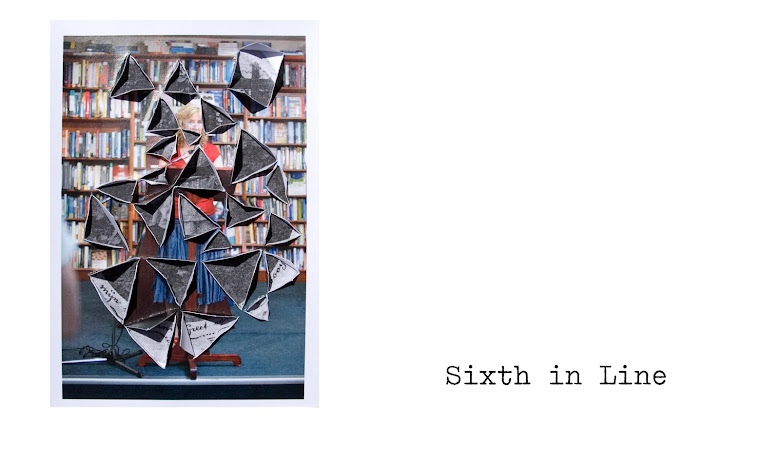
I once wrote a series of letters to my nine siblings suggesting that we cooperate in the writing of a book. We could each write a chapter on what it was like growing up in our ‘troubled’ family. The book never eventuated. We could not cooperate. Besides, I am a middle child, sixth in line. How could the editorial role fall to me, someone in the lower echelons of family chronology, and a girl to boot? How could I be permitted to take on such a task? How could I be deemed the arbiter of what gets included?

The advantage for a woman of my generation, who is more likely to have changed her name in marriage, is that the details of her family name are obscured and therefore less likely to become an issue in the disclosure stakes.

Most teachers of writing will tell you just to get on and write it first, worry about how you publish later.

The joys and dangers of blogging are that less of this process needs to take place. It is rather like going to a bakery where the bread is fresh out of the oven, rather than going to the supermarket where the bread has been standing around for hours going through the process of being sliced, bagged, labeled and transported to supermarket destinations near and far way. The latter bread tastes more predictable and bland but it is safer perhaps, albeit more doctored, than the stuff fresh out of the baker’s tray.

Which is another rule of successful autobiography: the rule of keeping it vital, which as Janet Malcolm points out, involves a degree of exclusion and a level of fictionalising that clashes with the first rule of ‘telling the truth’.

The next accusation to be leveled at the autobiographer involves that of narcissism. What makes you think your life is so interesting that anyone else would want to read about it? Who do you think you are?

You do not hear such arguments leveled against artists who paint their self-portraits regularly, who examine the intricacies of their form and with flourish. These self-portraits are rarely considered narcissistic, at least not as far as I have heard. Artists can include a life long chronology of their self-portraiture and no one bats an eyelid, but loves to see the progress. No such indulgence is offered to the unwary autobiographer who repeats herself, whose self image changes over time, and who is inconsistent in her self appraisals and perspectives of others.

It is one thing to write about the past, especially the far distant past, ten years ago and more. There is a certain sense of completion to events that happened then. We have had time to think about these experiences, to reflect on them and every time we do, they change a little.

Memory is like that. Every time we remember an event we reformulate it. We tweak it at the edges. We offer it more internal and logical sense than it might have had at the time.

As Timothy Garton Ash writes memory is like a re-write able CD, each new version replaces the last. And we all know that memory is unreliable and prone to distortion.

When we write about the present the task is even harder. Our memory for recent events is likely to be better. We can embellish the details more effectively. We can remember more precisely the exact curve in the teacup and the way her hair curls on top, but the experience is all too close. It feels raw. It has little of that sense of completeness that comes out of our continual revisions - both conscious and unconscious - and therefore it is prone to exaggeration and distortion.

Besides the people who participated in the recent events described are far more likely to be around at the same time and their memories of the event are also fresher. They might have a different view and disagree with yours, or they might not yet be ready to reflect on the experience.

So it was for me when I wrote about my daughter’s wedding too soon after the event and posted it on my blog. She had not realised that I had felt so hassled on the morning of the day. Why hadn’t I talked to her about it? she asked. Why had I chosen to write about it on my blog? Why had I included details that might identify her?

My blog is too public. I can be too readily identified. I should conceal my identity and not let anyone else in the blogosphere know who I am in real life.

‘The people who blog are not all who they say they are,’ another daughter tells me. ‘You can’t talk about those people in blogdom as real, because there is every chance they are not.’

I am torn. What would it be like, I wonder, to write under a veil of anonymity? To write under a pseudonym? To write as though my name were not my name. To write as though I were someone else.

I have not yet been able to do this effectively. I have tried to write fiction. I have tried to write about events that come from the well of my imagination, but they are always events that have been part of my experience. I might give over the events to various made up characters, but they too come from my experience.

I cannot write into the complete unknown, but I admire those whose imaginations are so robust that they can.

I am stuck with the so called ‘reality’ of my world, its past and its present. I feel handicapped by this and yet I cannot write about any other world or place and time. Only the world I know. When I imagine other worlds, invariably I remember them through the lens of my own experience.

I do not write the truth, the whole truth and nothing but the truth, only variations on it. I write from my experience but the events I describe are based on memories of times gone by, even if they only happened yesterday, and in so doing I embellish these events, I reconstruct them.

I do not lie, but it is not the absolute truth and my perspective can vary depending on from which part of me I write. For I am as multiple in my perspectives as are those other participants in the same events.

Now I will tell you why I refuse to travel incognito, even on this blog where my adult children warn me I should be more careful. I should conceal my identity; I should hide the 'truth' of myself.

I grew up in a family in which we were told to ‘do as if nothing is wrong’; ‘keep it to yourselves’; ‘don’t let the neighbours know’; ‘hide’.

I write to escape these injunctions.

I write to reorder and thereby to create some illusion of control, to redress wrongs, to turn my helplessness into strength, to expose the wrong doers in my life, including my own wrong doings and to offer another perspective, one that can be reworked again and again into another version of the same events by other writers and participants to come.

Through my writing I can both hide and reveal.
Saturday, April 10, 2010

Who Owns the Story

The other day as I sat on one of those high stools in the glassed off alcove in Mario’s coffee house talking to a friend about my crisis of confidence, I found myself yet again re-evaluating my thesis in my head.
‘Why do you bother looking at Helen Garner?’ my friend said. 'She is not so self-reflexive as certain other Australian writers. Writers like…’
He hesitated, scanning his mind, '...like Drusilla Modjeska.'
Ping went my mind. Back to Modjeska.
‘But she lives in Sydney,’ I said, and my friend laughed.
‘You have to have access to her?’

I have asked myself this question many times over: why do I feel this need to mix the writer with the text?

Why can I not stand up like any self respecting critic and simply analyse the text? Why do I find it so unsatisfying, simply to pull apart someone else’s story on the page?
Why am I always trying to get myself inside the story, to get inside the story of the back-story by way of any connection I might form with the actual writer?

The writer and the text are not the same, I know that. But often times I find I am more interested in the writer, than in the text, and yet the text leads me to the writer.

Halfway up the Burke Road hill in Camberwell, just before the railway station there was once a bookshop known as The Little Book Room. It was unusual for its careful selection of books, as if the owners had handpicked each book with great and loving care. The shop had the feel of a personal library. It was like roaming through someone’s store of books in an overcrowded house. The books even lined the steps and at times appeared in what seemed like no particular order at all.

It was in this shop that I first came across Drusilla Modjeska’s, biography of her mother, Poppy. The cover drew me in, the sepia toned photo of a mother and her baby, the words transcribed from the text, Modjeska’s words, so familiar to me now, a mother urging her baby to look into the mirror.

'There, see there. Look it’s you.' That moment of recognition, between mother and baby, that moment of connection.

I bought the book and read it over the next weeks. The story and the writing gave me hope, the greatest hope of all that someday I too might be able to write like this.

Modjeska became my initial point of reference for my own attempts at writing. When my writing teacher in the novel writing class I joined in 1997 criticised my narrator as drowning the energy from my story, I listened only with one ear, one eye. I wanted too much to be like Modjeska. She could get away with it. Why ever could I not join her , imitate her style?

Now I recognise the need to find my own voice, even as it echoes back in my ears, tinny and self serving, with none of the gentle cadences and rhythms of Modjeska’s words, but I must trust myself, otherwise I will plunge back into that empty space of my childhood where I seemed able only to copy the greats.

Poppy’s story impacted on me, the thin veneer of criticism against Modjeska's father who could not understand or show compassion towards his troubled and sensitive wife, Modjeska's grandmother, China, who bore Poppy into the world, China who seemed so cold and unyielding.

I read Poppy with an eye to the words. Their meanings did not envelop me until later. I was so entranced by the sheer lyricism of Modjeska’s prose that initially I did not take in too much of the story. The childhood memories of Modjeska's mother, her mother’s depression, all these images washed over me. I found I was more concerned with the narrator, than with the one whose biography she records.

In an essay about the process of writing Poppy, Modjeska writes: ‘To write as an act of remembrance, is to be like a lover, a perfect lover who can enter but not possess...’

I have been in the wars of late over issues to do with the business of ownership. Who owns the story? - the person who writes the story? the person written about? None of us or all of us?

I ask you.

Saturday, January 30, 2010

Leaving Home

We think of leaving home as a single event, the one day in our life when we finally take the world onto our shoulders and close the door on home. In the future, trips back home will be visits only and we will enter the place of our birth, our parental homes as guests only. We might still hold a key to the door, we might have visitors’ rights but that is all they are: the rights of a visitor not of an inhabitant.

When I think of leaving home I think of the day towards the end of the summer holidays after my first year at university when I decided along with my younger sister and a school friend to move out of home and share a house together. I cashed in my Commonwealth scholarship for a cadetship that bound me for two years to the Health department at the completion of my degree. My sister and her friend from school were both on studentships and bound to the Education department to work as teachers for two years at the completion of their degrees. When we pooled our resources we had enough money to pay the rent, to pay for other expenses and transport. We would survive.

‘You must leave during the daytime,’ my mother said. ‘When your father is not around.’

I had seen it before, my father’s rage when my older brothers left home, when my older sister left home, that they should dare to take their beds with them.
‘It’s my furniture,’ my father said. ‘It belongs in this house.'
The ten kilometers or so that spanned our two homes, the old and the new, may not seem such a distance to others who have left home by traveling overseas or through interstate travel, but for me it marked a void, the void between myself and my father. We did not say goodbye to him as we stood on the nature strip watching the small rental truck we had hired to carry our few possessions, including our two single beds, away.

We sneaked off in the middle of the day while he was away at work. He could not have suspected that his second and third daughters had finally decided to take themselves away. We were no longer within our father’s grip. He could no longer threaten or hurt us anymore.

Perhaps it is this failure to say goodbye that has left me with the odd feeling of never leaving home. Besides it was not the first time we had taken off without my father’s knowledge. There had been other flights from home, both day and night. The times when we went with our mother to stay with relatives, aunts and uncles for only for a few days, when our father was lost on a bender and dangerous. And there were times when we stayed with our older now married brother who had children of his own and a wife who resented our presence. What else could we do? We were homeless.

Then there was the time when my oldest brother had issued an edict to my mother that we younger children should be removed from her care so that she and my father could 'sort things out'. It is easy to say that the arrangement my brother made to have us stay with a Dutch foster family in Camberwell broke down, as if it all happened in the blink of an eye. It did not. It took time, three months of mutual misunderstandings.

I was turning sixteen at the time. We moved from foster care with the Dutch family to live with the nuns and our fellow students at Boarding school. We moved from day scholars into boarders overnight and like other boarders in convent schools we made many trips to and from home.

Why do I lose momentum here? What happens to my mind such that I cannot keep to one train of thought, such that I find myself distracted, wanting to give up, wanting to move elsewhere, anywhere but here at this keyboard at the computer struggling to put down words on the page that might tell a story of leaving home.

Now I have left home on the page and I do not know where to go. Lynn Freed says that when you are writing you must not think. You must listen. Listen. I do not listen so much as I see. I trawl my mind for images for memories, pictures come to me and people occupy these pictures and they say things to one another but I can scarcely hear them. Their words fade in much the way the Dutch language of my mother tongue has faded from my memory.

Listen. The wind is howling through the trees. It is hot and a storm is brewing. You can see a hint of it in the build up of clouds, white and clean, with crisp outlines. They hang low to the ground, so low that from the second storey of this Writer’s House I can almost reach out to touch them. Were I to touch them would they burst?

Listen. There are birds chortling in the distance and insects chittering. The wind has dropped and for a moment I can believe the storm has passed. It is like this writing, these storms of emotion that well up in me as I type, but as Lynn Freed argues, emotions as honest and real as they may be, do not translate into truth on the page.

I am caught between two voices, as much as I am caught between two activities, as much as I am caught between two worlds. One voice tells me to go into a scene with all the sensuous detail, write from your eye, paint a picture, get into the picture, get into the life of that picture now in the here and now. The other voice says, no, write as a reflection about a past moment. Do not look into your mind, but listen.

Can I hear my father calling to me? I cannot remember the sound of his voice, only as an idea, not an experience. What am I doing back here again, always back here. My father/myself. Why?

It is not fair. I must leave home. I must find another home, another place where he does not feature. Is it his voice in my head that tells me over and over again that I am worthless? Stop this now. Write. Write into the pain. Write into the memories. Write into the rage.

Forget your audience. Forget that anyone is ever going to read this stuff. Forget that you are writing for anyone but yourself. If you want to spend page after page pondering the nature of your relationship with you father then do it. If you want to write in the present tense about memories that feel as alive today as they did then, do it. If you want to write about the past, about your mother, about your family, about anyone or anything, then do it.

Stop this voice in your head that is forever telling you off, that is forever comparing you to the person nearby who is bound to be a better writer or a worse one. It matters not. Forget the others, forget them all, these brothers and sisters in your head who are forever demonstrating to you simply by their presence that you are no good relative to them; that your claims for space are invalid; that you have no right to be heard; to speak; to say the things you say.

If you want your fingers to fly across the keyboard in this manic and mad way, writing words again and again that have no reader in their sights; that in no way consider the needs of your reader, then do it.

You are free. You are like a bird. Fly. You have left home. You can write. Stop telling yourself what to do, what not to do. Stop looking for others to do the same. Stop this chorus of demands.

Exhaust yourself, throw yourself into the well of memory and imagination and find some point of entry from where you can get some comfort.

This writing is no comfort; fingers clicking on the keyboard are no comfort. You must have something to say. Say it.

Peter Bishop from Varuna says to write out of ‘doubts and loves’. Where do we put the hate? Is not hate on a continuum with the love? The ones we love are the ones we hate, beginning with our parents.

When I first read William Gaddis’s words quote in the Sunday Age in an article by Don Watson I knew that these words were important for me.
‘The best writing worth reading comes like suicide from outrage or revenge.’

It is not the first time I have been in a creative hole as deep as this. It is not the first time that I have sat alone at my writing desk wishing for something to come to me, some thread, some thought, some feeling or image that I might follow, but it is no less painful.

I ache all over with the refusal. My mind will not give it up. My mind will not let the words flow, will not let me arrive at some point where I can think, ah ha I have it. I know now what I am writing about. I know now what this book is about. I can proceed.

I start again and again, so many false starts so many attempts to move beyond this desperate feeling of not knowing what I am doing.

And the audience whom I tried to send away only five minutes ago is back again, my parents and siblings in the front row alongside my conscience. They say to me again, in a chorus, what are you on about? We don’t want to know this. Tell us a story instead and make it good. Make it interesting.

But if I start to tell a story, I am sure I will be in trouble with someone. That someone will tap me on the shoulder and say ‘what gives you the right?’

Enough, already we know this. Any writer worth her salt knows this, so why go on and on.